

The term AI funnel builder is everywhere. But if you look closely at the marketing tools claiming this title, you’ll notice a glaring issue: most of them aren’t building funnels at all. They are simply landing page generators with a prompt text box taped to the side.
A true marketing funnel is a living, breathing system. It is a calculated sequence of touchpoints designed to capture attention, build trust, and seamlessly turn a stranger into a paying customer. Generating a single webpage using a chatbot prompt is not a funnel. A funnel requires high-level strategy, robust capture mechanisms, automated follow-ups, dynamic qualification logic, and a frictionless path to revenue. The marketing industry's recent rush toward artificial intelligence has flooded the market with fragmented tools that solve micro-problems but entirely miss the macro-objective: launching cohesive campaigns that actually generate revenue.
Key Takeaways
- Most tools marketed as "AI funnel builders" are just fragmented page generators that require manual integration with email, CRM, and ad platforms.
- A true AI funnel builder architects the entire campaign ecosystem—from Meta ads and landing pages to qualification forms, checkout flows, and automated email sequences.
- Relying on a single AI chatbot limits functionality and causes strategic breakdown; launching high-converting campaigns requires coordinated AI specialists (Strategist, Copywriter, Designer, Media Buyer).
- Replacing your fragmented marketing stack with one consolidated platform drastically reduces campaign launch cycles from weeks to minutes, driving down customer acquisition costs.
- Speed to market is the new competitive advantage; the teams that can ideate, launch, test, and iterate the fastest will ultimately dominate their verticals.
The Core Problem: Why "AI Page Generators" Are Not Funnel Builders
If you’ve tried building a campaign with a standard AI landing page builder recently, your workflow likely mirrored the exact disconnected process you were trying to escape in the first place:
- You prompt a conversational AI to write landing page copy, fighting with the model to sound less robotic.
- You copy and paste that text into a visual page builder, spending hours formatting, aligning blocks, and adjusting mobile views.
- You prompt the AI again to write a three-part email nurture sequence, trying to remind the model of the context.
- You paste those emails into a separate marketing automation platform and manually map the timing triggers.
- You manually configure complex webhooks via third-party tools to connect your forms to your CRM so leads don't get lost.
- You write ad copy and manually build campaigns in Meta Ads Manager, hoping the ad messaging aligns with the final page.
In this scenario, you haven't actually saved time; you've just shifted the bottleneck. You are still acting as the "human API," stitching together disconnected tools. This high coordination overhead—what we call the "Frankenstack"—is exactly what slows down lead generation campaigns, burns out marketing teams, and kills revenue momentum for fast-moving businesses.
"Stop settling for single-page generators. To actually drive revenue, you need an AI funnel builder that creates the entire connected system—from the first ad click to the final checkout. Anything less is just a toy."
What is a True AI Funnel Builder?
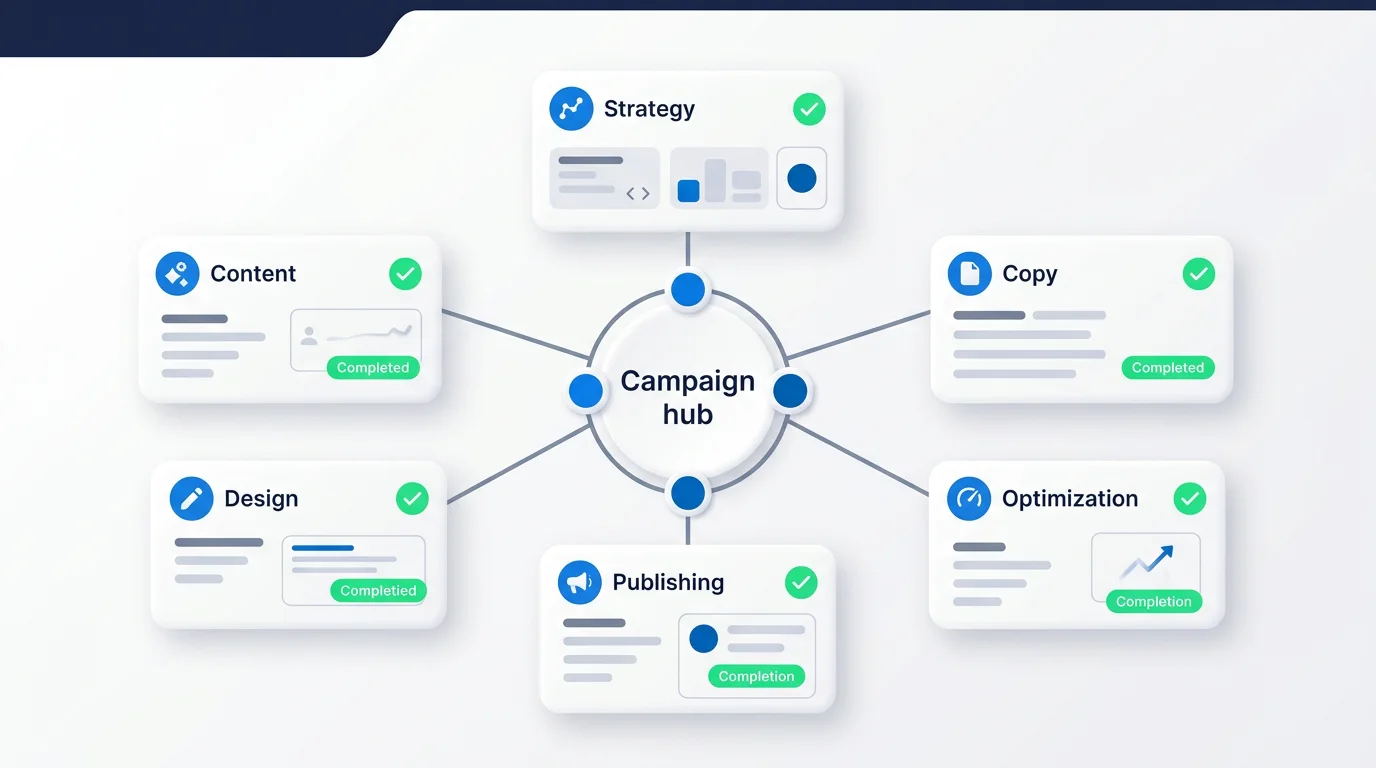
A genuine AI funnel builder is an integrated platform that conceptualizes, designs, and deploys every asset required for a customer acquisition campaign simultaneously. Instead of leaving you to piece together the puzzle, it generates the entire ecosystem in one coordinated motion. This represents a paradigm shift from prompting for isolated assets to launching complete campaigns.
When we talk about launching automated marketing campaigns, we are talking about creating a cohesive, linear journey for the user. A true funnel builder ensures that the messaging on your Facebook ad perfectly matches the headline on your landing page. It ensures that when a user fills out a lead form, the data is instantly routed, and an SMS message referencing their specific answers is triggered immediately. It operates with spatial awareness of the entire marketing strategy, not just the single webpage currently sitting in the editor.
The Great Divide: AI Funnel Builders vs. AI Page Builders
To understand the functional gap in the market, it helps to look at exactly where single-page generators stop, and where true end-to-end AI funnel builders begin.
| Capability | Standard AI Page Builder | True AI Funnel Builder |
|---|---|---|
| Core Output | A single HTML/CSS landing page. | A fully connected system: ads, pages, forms, emails, and checkout flows. |
| Copywriting Strategy | Relies on your prompt engineering skills to generate acceptable copy. | Autonomously researches the audience and structures proven direct-response copy frameworks. |
| Data Capture & Logic | Basic contact forms that require Zapier to send data anywhere useful. | Dynamic, multi-step qualification logic with native lead scoring and CRM routing. |
| Nurture Automations | Non-existent. You must use a separate platform like ActiveCampaign or Mailchimp. | Pre-written email and SMS sequences natively triggered by page behavior. |
| Traffic & Ads | Requires manual campaign creation in Meta Ads Manager. | Generates Meta ad creatives and syncs them directly to the platform via API. |
The 5 Essential Components of an AI Funnel Builder
To actively replace your marketing stack and launch campaigns rapidly, the software must architect and deploy all the interconnected assets at once. If your current tool is missing even one of these pillars, you are still building funnels manually. Here is what you should demand from your platform.
1. Strategic Foundation & Audience Intelligence
Before a single pixel is placed on a page or a word is drafted, you need a strategy. Instead of asking you to stare at a blank screen and write the copy from scratch, a premium AI platform acts as your strategic partner. It analyzes your target audience, identifies critical pain points, and structures the exact messaging angle required to convert your specific segment. Strategy isn't an afterthought—it dictates the entire architecture of the funnel, ensuring that the offer actually resonates with the market demand.
2. Connected Page & Form Generation
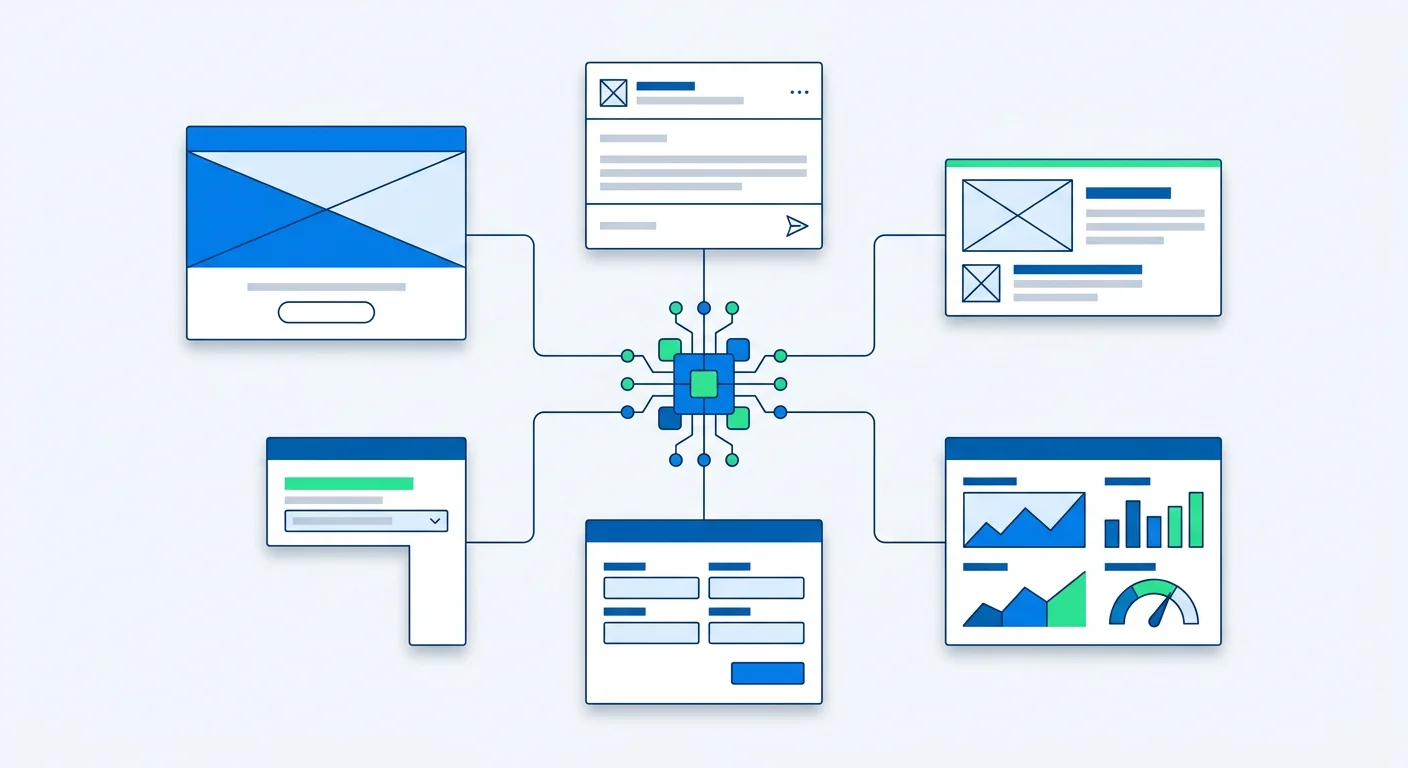
Your core landing pages shouldn't just look visually appealing—they must be functionally integrated. True AI funnel builders generate high-converting, brand-aligned pages complete with dynamic forms and qualification logic. Whether you need a simple lead magnet opt-in, a webinar registration, or a complex multi-step B2B qualification flow that weeds out bad leads, the system builds it to capture, score, and route data without requiring manual mapping or third-party webhooks.
3. Integrated Lead Nurture & Automations
A lead is entirely useless if it isn't followed up with immediately. A complete funnel builder writes, structures, and deploys the backend email and SMS automations perfectly mapped to the actions the user took on the page. If a user downloads a guide, they receive the delivery sequence with high-converting follow-up copy. If they abandon a booking flow, they receive a targeted reminder. By handling this natively, there is no Zapier required, no API breakages to fix, and no complex prompt chains to manage.
4. Native Checkout & Revenue Capture
For revenue-focused operators, the ultimate goal of a funnel is a transaction. A robust system natively integrates checkout and payments directly into the page flow. From one-click upsells (OTO), dynamic order bumps, to recurring subscription management, the AI ensures the friction between intent and purchase is practically zero. The faster a user can confidently hand over their credit card, the higher your conversion rate will be.
5. Traffic Generation & Ad Sync
A funnel without traffic is just an invisible web page sitting on a server. The most advanced platforms go beyond the domain layer. By integrating directly with advertising networks, they can automatically generate Meta Advertising campaigns. The ad copy, the creative, and the targeting are generated to perfectly match the messaging on the landing page, ensuring a cohesive user journey from the scroll on Instagram to the final thank-you page. This intense message-matching drastically lowers your Customer Acquisition Cost (CAC).
Coordinated AI Specialists vs. The Single Chatbot
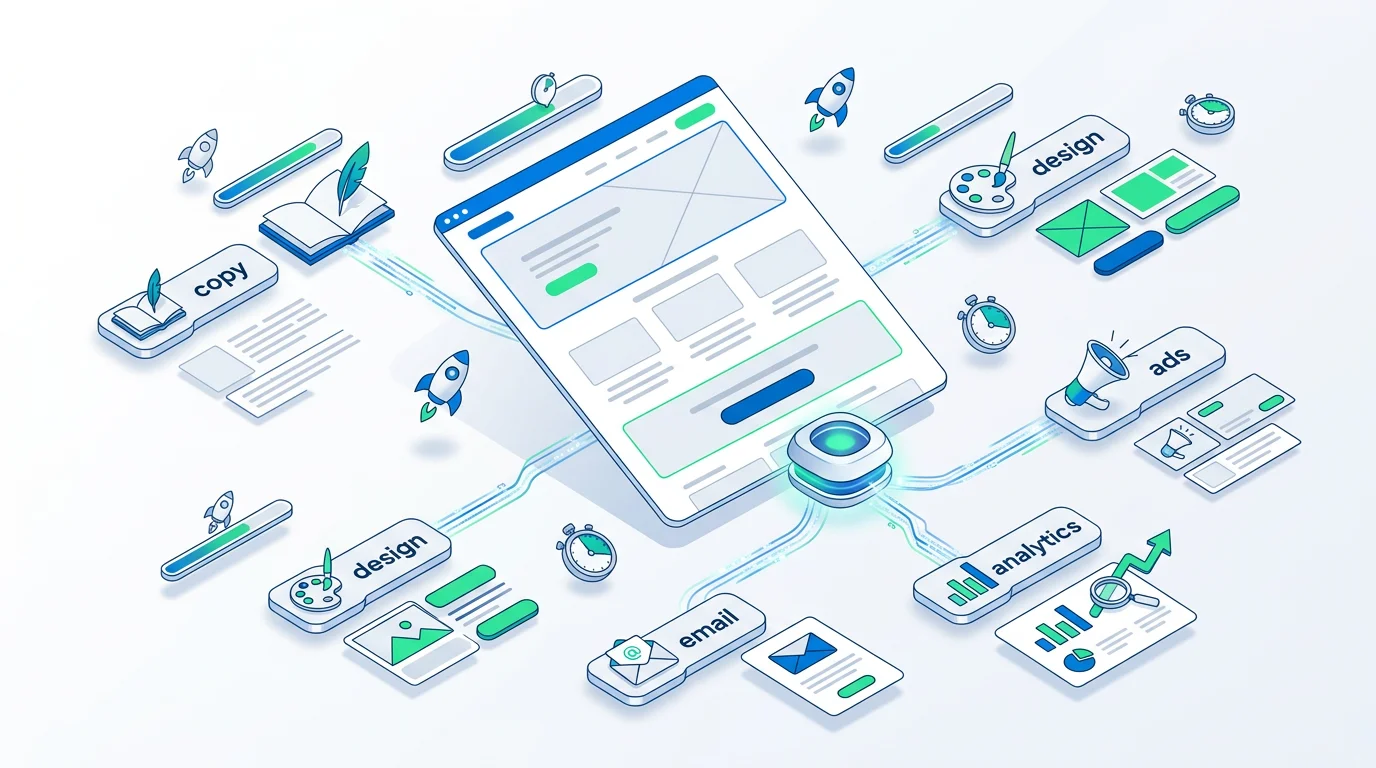
The secret to launching production-ready campaigns in minutes lies in the underlying AI architecture. This is why Superpage was built differently. We don't rely on a single, generalist AI model trying to simultaneously write copy, design layouts, and code automations. Pushing one Large Language Model (LLM) to do everything results in generic, uninspired outputs.
Instead, a true solution utilizes a framework of coordinated AI marketing agents. Think of it as hiring an entire elite marketing team that operates in milliseconds:
- The Strategist defines the offer, the unique selling proposition (USP), and the target persona based on deep market analysis.
- The Copywriter drafts the high-converting headlines, body copy, and email sequences based on proven direct-response frameworks, entirely avoiding the "fluffy" tone standard AI is known for.
- The Designer structures the visual hierarchy, applies your brand system, and ensures pixel-perfect mobile responsiveness.
- The Media Buyer generates the ad creatives and campaign structure tailored specifically for platforms like Meta.
Because these specialist agents communicate natively within the platform, there are no handoffs, no misaligned messaging, and no technical debt. You get a fully coordinated campaign where the ad matches the page, the page matches the form, and the form triggers the exact right email at the exact right time.
Step-by-Step Workflow: Building a High-Converting Funnel with AI
So, how does this actually work in practice? Moving away from the fragmented stack requires a shift in how you build. Here is what a modern workflow looks like inside an AI funnel builder.
Step 1: Define the Objective and Audience
Instead of starting with a blank canvas and dragging a hero image onto a page, you start by defining your goal. Are you capturing leads for a webinar? Selling a physical product? Booking consultations? You input your raw offer and your target demographic. The AI Strategist immediately analyzes the inputs and proposes an angle that aligns with current market desires.
Step 2: Generate the Strategic Blueprint
The system maps out the necessary funnel structure. For a high-ticket service, it might propose a Meta Ad → VSL (Video Sales Letter) Page → Qualification Form → Booking Calendar → Nurture Sequence. You review this architectural blueprint before anything is built, ensuring the logic is sound.
Step 3: Deploy the Unified Assets
With a single click, the coordinated AI specialists get to work. The copywriter drafts the VSL script and landing page text. The designer applies your brand kit (colors, typography, logos) to generate the live pages. The engineer builds the multi-step form and connects the data fields to the backend CRM. Within minutes, the entire front-end of the funnel exists.
Step 4: Configure Behavioral Automations
Behind the scenes, the platform has already drafted the follow-up email and SMS sequences. You simply review the copy, tweak any brand voice nuances, and approve the timing logic. The automations are inherently linked to the specific forms created in Step 3, meaning zero manual field mapping is required.
Step 5: Launch the Traffic Engine
Finally, you review the generated ad creatives and copy. Because the system syncs directly with Meta, you can push the campaign live without ever opening Ads Manager. From ideation to live traffic, a process that used to take three weeks is now completed in an afternoon.
Real-World Examples: How Industries Use AI Funnel Builders
The true power of this technology becomes apparent when applied to specific industry frameworks. Different business models require vastly different funnel mechanics.
1. B2B SaaS: The Frictionless Free-Trial Funnel
For SaaS teams, friction is the enemy of user acquisition. An AI funnel builder can instantly deploy a targeted landing page offering a 14-day free trial. If the user hesitates, an exit-intent pop-up offers a downloadable case study instead. The AI writes the lead magnet, builds the pop-up, and sets up a 5-day email sequence designed to educate the lead and push them back toward the trial sign-up. Everything is interconnected.
2. Ecommerce & D2C: The High-AOV Upsell Flow
An e-commerce brand selling physical products can use the system to build an optimized sales page that bypasses the traditional, clunky Shopify storefront. When a customer purchases the core product, the native checkout seamlessly presents a one-click upsell (OTO) for a complementary product. If they decline, a downsell offer is presented. This automated routing maximizes the Average Order Value (AOV) and ensures profitability on front-end ad spend.
3. High-Ticket Services: The Automated Qualification Funnel
Consultants, agencies, and high-ticket service providers rely on generating highly qualified appointments. Using an AI lead generation funnel, the platform deploys a long-form sales page driving to an application form. The AI logic conditionally routes users: prospects with large budgets are sent directly to a booking calendar, while unqualified leads are routed to a low-ticket digital product or a polite rejection page. This saves sales teams hundreds of hours of wasted calls.
The Ultimate Evaluation Checklist for AI Funnel Builders
If you are evaluating platforms to consolidate your marketing stack, do not get blinded by the "AI" label. Demand proof of systemic integration. Use this checklist before committing to a software vendor:
- Does it generate actual system logic? (Or does it just spit out static HTML pages?)
- Is the copywriting driven by marketing frameworks? (Does it understand pain points, objections, and urgency, or is it just generating generic ChatGPT filler?)
- Are the forms natively connected to email sequences? (Or will you have to buy a Zapier subscription to make the data move?)
- Does it handle checkout and revenue? (Can you process payments directly on the platform with Stripe, including upsells and order bumps?)
- Can it generate and sync Meta Ad campaigns? (Or is traffic generation left entirely up to you to figure out externally?)
- Does it offer multi-agent coordination? (Are specialized AI models handling design, copy, and code, or is a single model struggling to do it all?)
Frequently Asked Questions
Will an AI funnel builder completely replace my marketing team?
No. It acts as an incredible force multiplier. It removes the tedious implementation work—coding, formatting, connecting APIs, writing initial draft copy—allowing your marketing team to focus entirely on high-level strategy, offer creation, and analyzing campaign performance.
Is the generated copy generic and robotic?
Standard AI tools produce generic copy because they aren't given strategic context. A dedicated funnel builder utilizes an AI Copywriter agent that relies on proven direct-response frameworks, deep persona research, and your specific brand voice guidelines to output high-converting, emotionally resonant messaging.
Do I need technical skills to connect everything?
That is exactly what a true platform eliminates. Because the pages, forms, emails, and ads are all built within the same ecosystem simultaneously, the connections are made natively. No coding, no API keys, and no webhook troubleshooting are required.
Can I still integrate it with my existing CRM like Salesforce or HubSpot?
Yes. While the funnel builder handles the immediate capture, qualification, and initial nurture, robust platforms will offer native integrations or simple handoffs to push qualified, sales-ready leads into your enterprise CRM of choice for your sales team to manage.
The True ROI of Marketing Consolidation
Using a fragmented stack isn't just slow—it's incredibly expensive. You are paying for a landing page builder, an email automation tool, a form builder, an analytics suite, and a checkout provider. Worse yet, you are paying a massive hidden tax in the sheer amount of time it takes your team (or your agency) to manage the connective tissue between these tools.
An AI funnel builder like Superpage eliminates those overlapping software subscriptions and removes the technical barriers to entry. By utilizing coordinated AI agents to deploy complete, connected systems, teams can finally test new ideas as fast as they think of them. When the cost, time, and friction of launching a campaign drop to near zero, your ability to experiment, iterate, and scale revenue grows exponentially.