

If you search for an AI landing page builder today, you’ll find dozens of tools that promise to generate a fully designed page in seconds. You enter a prompt, click a button, and watch as the software spits out a generic layout filled with placeholder text and stock photos. It looks like magic—until you actually try to launch a marketing campaign with it.
The reality for revenue-focused operators, B2B SaaS teams, and demand generation agencies is that a standalone landing page is rarely enough. Without the right strategic positioning, a high-converting lead capture form, dynamic routing logic, and automated email follow-ups, your newly generated landing page is essentially just a digital brochure.
In modern marketing, building the page is only 10% of the work. The other 90% is strategy, integration, tracking, and follow-up. This article will help you navigate the noise, evaluate what actually matters, and choose an AI platform that drives real revenue, not just mockups.
Key Takeaways
- Most AI landing page builders are just graphic design tools with a basic ChatGPT wrapper. They generate layouts, not campaigns.
- A high-converting page requires deep strategic positioning and market research before a single pixel is generated.
- To actually generate revenue, your page must seamlessly connect to forms, qualification logic, email automation, and ad platforms.
- Effective AI lead generation relies on coordinating multiple assets seamlessly, not just launching an isolated web page.
- Modern marketing requires coordinated AI specialists, not a single chatbot, to move from idea to live funnel without stitching tools together.
The Problem with Basic AI Landing Page Generators
The current landscape of AI website builders treats landing pages as isolated graphical assets. When evaluating these tools, buyers often fall into a trap: they judge the software based on how quickly it can render a hero section or generate a color palette, rather than evaluating how effectively that page will convert traffic into qualified pipeline.
These entry-level tools don’t understand your ideal customer profile (ICP). They don't analyze your competitors' offers, and they certainly don't map your front-end call-to-action to your back-end CRM and email sequences. This fundamental disconnect leaves marketing teams stuck doing the heavy lifting:
- Endless Prompt Engineering: Writing and rewriting prompts endlessly just to get the headline positioning somewhat close to reality.
- The Frankenstein Stack: Stitching the generated page to a separate external form builder using clunky embed codes.
- Fragile Integrations: Relying on Zapier or Make to route new leads into a completely different email platform.
- Manual Follow-ups: Drafting the actual confirmation emails and nurture sequences in yet another tool, losing context along the way.
- Lack of Funnel Context: Forgetting that a landing page usually needs a thank-you page, a calendar booking page, and a checkout page to actually convert. This is why you need an AI funnel builder rather than a single-page generator.
Marketing isn't just about building pages; it's about building complete campaigns. A standalone page without a coordinated follow-up strategy is a dead end for your ad spend.
Practical Examples: When AI Fails Without Strategy
To understand why basic generators fall short, let’s look at two practical examples of campaign execution where strategy makes or breaks the outcome.
Example 1: The B2B SaaS Webinar Launch
Imagine a B2B SaaS company that wants to host a webinar on data compliance for enterprise legal teams.
- Using a basic AI page builder: The marketing manager types, "Create a landing page for a B2B webinar on data compliance." The AI generates a generic page with a big hero image of a smiling business person, placeholder text that says "Transform Your Data Today," and a button that doesn't connect to any database. The marketing manager spends the next three hours rewriting the copy, finding an external form tool, embedding the form, and setting up a Zapier link to their email software so registrants actually get a webinar link.
- Using a coordinated AI platform: The marketing manager instructs the system to build a campaign for a data compliance webinar targeting enterprise legal teams. The Strategy Agent researches the specific pain points of enterprise legal teams (e.g., GDPR fines, internal audit stress). The Copywriter Agent drafts hyper-specific copy addressing these pains. The Conversion Agent automatically generates a custom form capturing company size and role. The Automation Agent instantly drafts the registration confirmation email and the 24-hour reminder sequence. Everything is ready to review in minutes. This demonstrates the power of true AI marketing agents working in concert.
Example 2: The High-Ticket Consultant
A consultant wants to offer a free audit to capture leads, then route qualified prospects to a paid discovery call.
- Using a basic tool: The tool creates a "Free Audit" page. But it cannot handle dynamic routing. If a small business with no budget applies, they get the exact same calendar link as a Fortune 500 company, clogging up the consultant's schedule with unqualified calls.
- Using a coordinated AI platform: The platform builds the page alongside native qualification logic. If a lead selects "< $100k revenue," they are routed to a polite down-sell page offering a free PDF. If they select "> $1M revenue," they are instantly routed to the high-priority calendar booking page.
What to Look for in a Modern AI Landing Page Builder
If your goal is to launch campaigns faster and reduce your dependency on massive marketing tool stacks, a simple page generator won't cut it. You need an environment where strategy, design, conversion, and automation happen concurrently. Here is what you must evaluate when choosing an AI page builder in 2026.
1. Deep Strategic Positioning Before Generation
A high-converting page starts long before the design phase. It begins with strategy. Instead of relying on a generic language model to guess your messaging, a true platform uses coordinated specialists.
For instance, AI Strategy & Positioning should act as your lead strategist—analyzing the market, mapping out the buyer's journey, and defining the core value proposition. Only when this foundation is set should the system instruct the builder on what to create. This ensures that every headline, benefit bullet, and call-to-action is anchored in actual customer psychology, not generic AI fluff.
2. Native Form Generation and Lead Qualification
What happens after a user clicks "Get Started"? If your AI builder doesn't answer this natively, it's incomplete. Modern marketing requires seamless Forms & Qualification.
Instead of forcing you to use Typeform or HubSpot embeds, an advanced AI builder generates the lead capture flow alongside the page. It can dynamically adapt the form fields based on the context of the page and automatically route high-intent leads to a booking calendar, while disqualifying poor-fit prospects instantly.
3. Automated Follow-Ups Built In
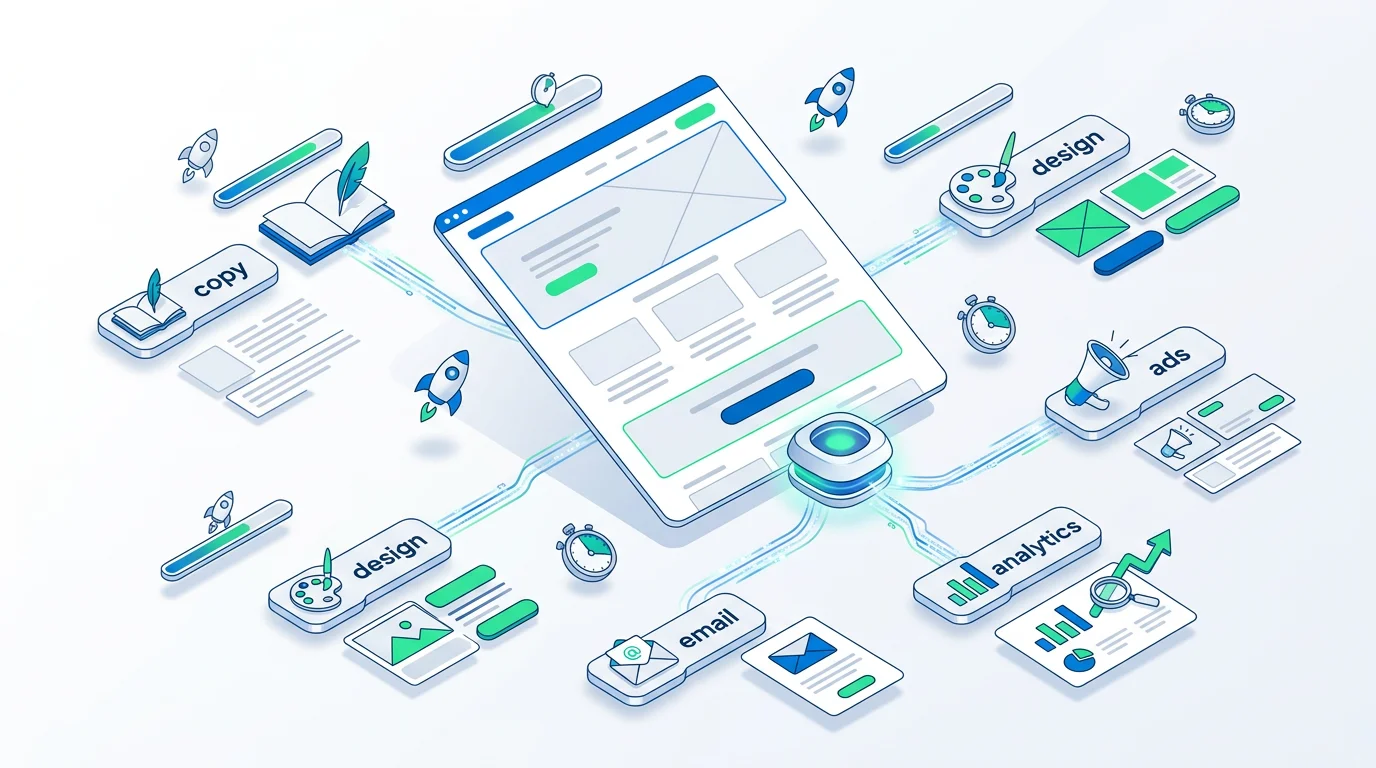
Generating a lead is only step one. Engaging them immediately is where conversions happen. The best AI landing page builders integrate AI Automation directly into the page creation process. As your page is being designed, a specialized AI agent should simultaneously draft the confirmation emails, SMS reminders, and long-term nurture sequences that match the specific offer on your new page. This capability forms the backbone of automated marketing campaigns, ensuring no lead falls through the cracks.
4. Direct Monetization with Checkouts
For D2C brands, creators, and SaaS companies selling entry-level tiers, the landing page is often the point of sale. If your builder forces a redirect to a disconnected Stripe or Shopify page, conversion rates plummet. A robust platform includes native Checkout & Payments generation, creating secure, high-converting payment rails that match the exact branding of the AI-generated landing page.
5. Meta Ads Connectivity
Traffic has to come from somewhere. Standalone builders ignore the top of the funnel. If you are launching a campaign, you need creatives and ad copy that align perfectly with the landing page destination. Advanced platforms are now capable of generating Meta Advertising assets—both copy and visuals—that mirror the messaging of your landing page, ensuring a cohesive buyer journey from the Facebook feed to the final conversion event.
Tool-Selection Checklist for 2026
When you are evaluating an AI landing page builder, use this checklist to ensure you are buying a tool that creates revenue, not just mockups.
- Strategic foundation: Does it generate positioning and analyze your ideal customer profile before it creates the page layout?
- Native lead capture: Can it build forms and dynamic lead qualification routing without embedding third-party widgets?
- Built-in automation: Does it automatically draft follow-up emails, SMS, and long-term nurture sequences tailored to the page offer?
- Monetization features: Can it handle native payments and checkouts directly on the page without redirecting users?
- Multi-agent architecture: Are there specialized AI agents (strategy, copy, design, conversion) collaborating, or is it just a single text prompt?
- Code quality: Does it produce fast, mobile-optimized HTML/CSS code that ranks well for Core Web Vitals?
- Ad connectivity: Can it generate matching ad creatives and copy for Meta or LinkedIn that align with the landing page destination?
Comparison Table: Traditional AI Builders vs. Multi-Agent Platforms
Let's break down the tangible differences between the two approaches when evaluating marketing software in the modern era.
| Feature / Capability | Basic AI Page Generator | Multi-Agent AI Platform |
|---|---|---|
| Output Delivered | A single graphical web page with placeholder text. | A complete, connected campaign (Page, Emails, Ads, Forms). |
| Strategic Intelligence | None. Relies entirely on the user to prompt accurate messaging. | Native Strategy Agent analyzes ICP, market, and pain points first. |
| Lead Capture | Requires external embeds (Typeform, HubSpot) and Zapier. | Native, dynamic forms with instant qualification routing. |
| Follow-up Automation | Non-existent. You must write and set up emails elsewhere. | Automation Agent drafts and stages email/SMS sequences instantly. |
| Time to Launch | Days (due to manual integration and rewriting). | Minutes. |
How Coordinated AI Agents Build Complete Campaigns
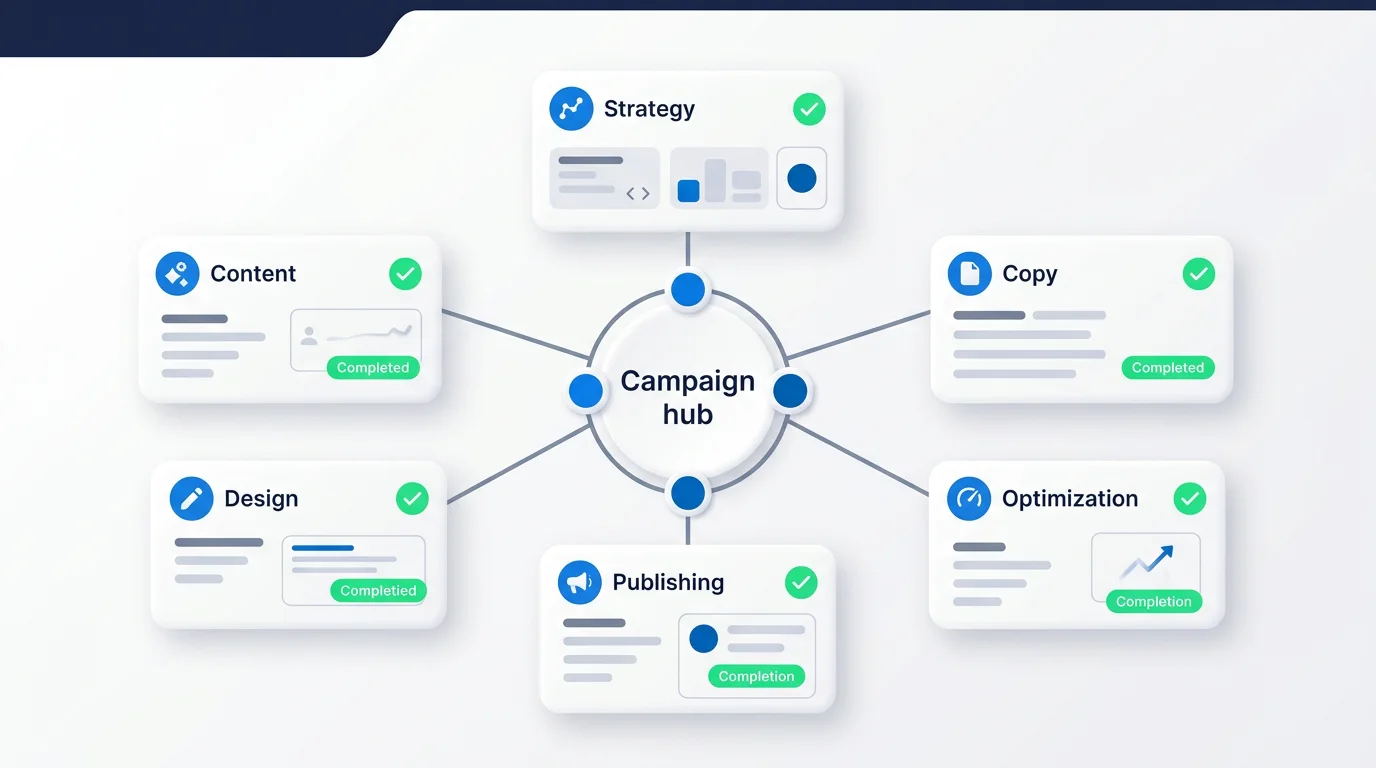
The next evolution of the AI landing page builder isn't just a better prompt interface—it's an operating system where multiple AI agents work together in harmony. At Superpage, we call this "marketing built by agents—not prompts."
When you decide to launch a campaign, here is how a multi-agent platform approaches it compared to a basic page generator:
- The Strategist Agent: Defines the target audience, the core offer, and the messaging hierarchy before any code is written.
- The Copywriter & Designer Agents: Collaborate to build AI Pages & Funnels based on the Strategist's brief. They ensure consistent branding, compelling hooks, and mobile-optimized layouts.
- The Conversion Agent: Evaluates the offer and automatically spins up the required forms, qualification logic, and checkout integrations needed to capture demand effectively.
- The Automation Agent: Drafts and stages the confirmation emails, SMS nudges, and behavioral follow-up sequences so that no lead falls through the cracks.
FAQ: Choosing the Right AI Landing Page Software
To help you make the best decision for your marketing stack, here are answers to the most common questions operators have when adopting AI page generation.
Will an AI landing page builder replace my designer and copywriter?
Not necessarily replace, but it will profoundly elevate their output. Instead of spending hours on wireframes and initial drafts, your team can use a multi-agent platform to instantly generate a highly strategic baseline. The team then steps into an editorial and optimization role, refining the campaign rather than building it from scratch.
How do these tools handle SEO and page speed?
Basic tools often generate heavy, bloated code or rely on slow site-building frameworks with excessive scripts. Advanced platforms generate clean, semantically correct HTML and modern styling architectures (like Tailwind CSS) that are lightning-fast and perfectly optimized for core web vitals, giving you an immediate technical SEO advantage.
Can I integrate my existing CRM?
Yes. While the goal of a modern platform is to reduce your reliance on fragmented tools by handling forms, automations, and checkouts natively, enterprise-grade AI builders offer robust webhooks and direct integrations. This allows you to seamlessly push qualified lead data into Salesforce, HubSpot, or any central system of record.
Why do I need multiple AI agents? Isn't ChatGPT enough?
ChatGPT is a generalized model. When you ask it to write a landing page, it uses generic, average marketing language. A multi-agent system uses specialized models configured for specific roles. The Strategy Agent operates under different directives than the Conversion Agent. When these specialists collaborate, you get a cohesive, high-converting funnel, not a generic wall of text.
The Verdict: Replace Your Fragmented Marketing Stack
If your current workflow involves jumping between a landing page builder, a standalone form tool, an email marketing platform, and a Zapier account just to get one marketing idea live, you are moving too slowly. You are wasting hours on integration and formatting instead of focusing on strategy and growth.
The goal of an AI landing page builder shouldn't just be to build a single web page slightly faster. The goal is to move from a raw idea to a completely live, revenue-generating campaign in minutes. By centralizing the creation of pages, emails, automations, and ads into one AI-native platform, modern teams can execute at a scale previously reserved for massive enterprise departments.