
Generating a lead isn’t the hard part anymore. We live in an era where driving top-of-funnel traffic and capturing an email address is entirely commoditized. The real challenge—the one that stalls growth teams and inflates customer acquisition costs (CAC)—is capturing qualified leads and moving them into a sales pipeline before they go cold.
For years, marketing and revenue teams have relied on a heavily fragmented approach: stitching together a landing page builder, a standalone form tool, Zapier automations, a basic email sender, and a CRM. This duct-taped stack slows down campaign launches, creates isolated data silos, and guarantees a sluggish speed-to-lead. When you are paying a premium for B2B clicks or high-intent consumer traffic, a slow, uncoordinated follow-up directly kills conversion rates.
The next evolution of growth isn't about generating more volume; it's about deploying AI lead generation through coordinated marketing agents that handle the entire workflow—from page creation to qualification, routing, and instant follow-up—inside a single platform.
TL;DR
Modern AI lead generation has evolved far beyond simple chatbots. It involves deploying coordinated AI marketing agents that replace fragmented tool stacks to manage the entire conversion funnel. From dynamically building landing pages and adjusting form qualification criteria in real-time, to executing instant, personalized email follow-ups and routing high-intent buyers directly to your sales team, AI eliminates operational lag. The result is lower customer acquisition costs (CAC), hyper-qualified pipelines, and the ability to launch comprehensive campaigns in minutes rather than weeks.
Key Takeaways
- Volume vs. Quality: The focus of modern lead gen has shifted from maximizing raw MQLs to identifying and routing high-intent buyers instantly.
- The Fragmented Stack Liability: Connecting separate page builders, form tools, and automation software creates latency and breaks campaign consistency.
- AI Agents Over Chatbots: True AI lead generation utilizes coordinated AI specialists to build entire funnels, not just single-prompt copy generation.
- Dynamic Routing Wins: Replacing static forms with AI-driven qualification paths increases pipeline velocity by allowing top prospects to book immediately.
What Exactly is AI Lead Generation?
At its core, AI lead generation is the application of advanced artificial intelligence to autonomously identify, attract, qualify, and route potential customers into a sales pipeline. For many years, the term was inappropriately applied to basic, rules-based chatbots that sat in the corner of a website running rigid decision trees. Today, true AI lead generation is a holistic, system-wide approach that manages the entire prospect journey from the initial ad click to the booked sales call.
Rather than acting as a simple writing assistant, modern AI lead generation relies on automated marketing campaigns managed by specialized AI agents. These agents work together to orchestrate top-of-funnel awareness, middle-of-funnel education, and bottom-of-funnel conversion without requiring a human operator to manually bridge the gaps between disparate software tools.
By leveraging large language models (LLMs) and intelligent routing algorithms, AI lead generation platforms can interpret user intent, adapt messaging dynamically, and make real-time decisions about how a specific prospect should be handled. It transforms a static, one-way marketing website into an active, intelligent conversion engine that works around the clock to fill your pipeline with high-intent buyers.
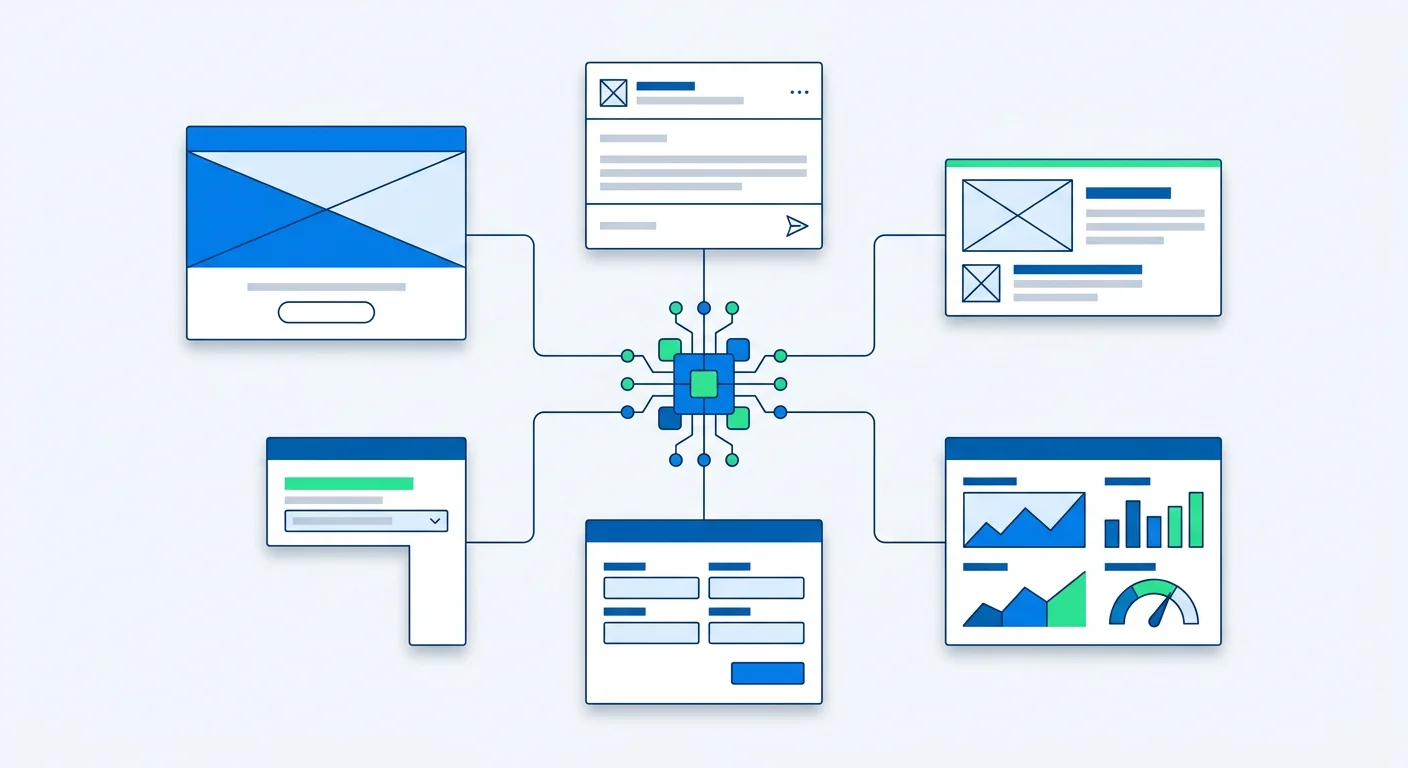
The Paradigm Shift: Quality Over Volume
For the last decade, B2B, consulting, and high-ticket B2C marketing teams have operated under a volume-first mandate. The conventional playbook was simple: drive as much top-of-funnel traffic as possible, capture as many email addresses as your budget allowed, and throw the massive list over the fence for the sales team to sift through. This approach birthed what we now call the "MQL (Marketing Qualified Lead) trap." Marketing teams easily hit their lead volume quotas, but sales pipelines were clogged with low-intent prospects, students, and window-shoppers who were never going to convert.
The paradigm has officially shifted. In a competitive landscape where high-intent traffic is expensive and buyer attention is highly fragmented, focusing purely on raw lead volume is a fast track to inflated Customer Acquisition Costs (CAC) and severely burned-out sales development representatives (SDRs). The modern growth team understands that processing 1,000 unqualified leads is infinitely more expensive than capturing 10 highly qualified, sales-ready buyers.
AI lead generation flips the traditional model by prioritizing quality, context, and intent over sheer numbers. By utilizing real-time behavioral analysis, dynamic form fields, and intelligent data routing, an AI-powered system ensures that only prospects who meet your specific budgetary, timeline, and firmographic criteria are pushed to your expensive human sales resources. The rest of the traffic isn't wasted; it is seamlessly guided into automated nurture sequences, self-serve product flows, or lower-tier webinar funnels. This ruthless prioritization drastically improves the operational efficiency of your revenue team and ensures your highest-paid closers are only spending their valuable time on winnable deals.
The Problem with the Traditional Lead Gen Stack
Traditional lead generation workflows require massive coordination overhead. When a marketing team wants to launch a new campaign to capture leads, the process looks something like this: a strategist outlines the funnel, a copywriter drafts the page, a designer builds the assets, an operations specialist configures the forms, and finally, someone duct-tapes it all to the CRM using third-party automation tools.
Because every tool in the stack is disconnected, the prospect’s experience is disjointed. They land on a generic page, fill out a static form that interrogates them regardless of their actual intent, wait hours (or days) for a manual follow-up, and often receive generic automated emails that lack context. In B2B SaaS, consulting, and high-ticket sales, this operational friction directly kills conversion rates.
"Growth teams don't suffer from a lack of top-of-funnel volume; they suffer from fragmented systems that fail to qualify and route leads instantly. If your lead generation stack requires a Zapier Ph.D. to function, you are already losing to faster competitors."
What Real AI Lead Generation Looks Like
Most marketers hear "AI lead generation" and immediately picture a generic, slightly annoying chatbot sitting in the bottom right corner of a website. That is a narrow, outdated view. Real AI lead generation is about deploying a system built by coordinated AI specialists—not single prompt chains. These AI agents plan, launch, and optimize your entire connected conversion funnel from end to end.
Instead of acting as an assistant that writes a few lines of copy, enterprise-grade AI marketing platforms act as the executor. They replace your entire fragmented stack, meaning the page builder, the form logic, the email follow-up, and the ad campaign all share a single brain.

The Modern AI Lead Generation Workflow
To truly understand how this operates in practice, we have to examine the new standard for campaign execution. The modern AI lead generation workflow completely collapses the traditional marketing timeline, moving from strategic ideation to a live, revenue-generating deployment in a fraction of the time.
1. Strategy and Funnel Architecture: The process begins by defining your target audience and core offer. Using an intelligent AI funnel builder, growth teams simply input their primary value proposition and target market. The AI acts as a strategic co-pilot, instantly suggesting the optimal funnel structure—whether that requires a direct-to-calendar booking flow for enterprise software clients, or a high-value lead magnet download for top-of-funnel audience education.
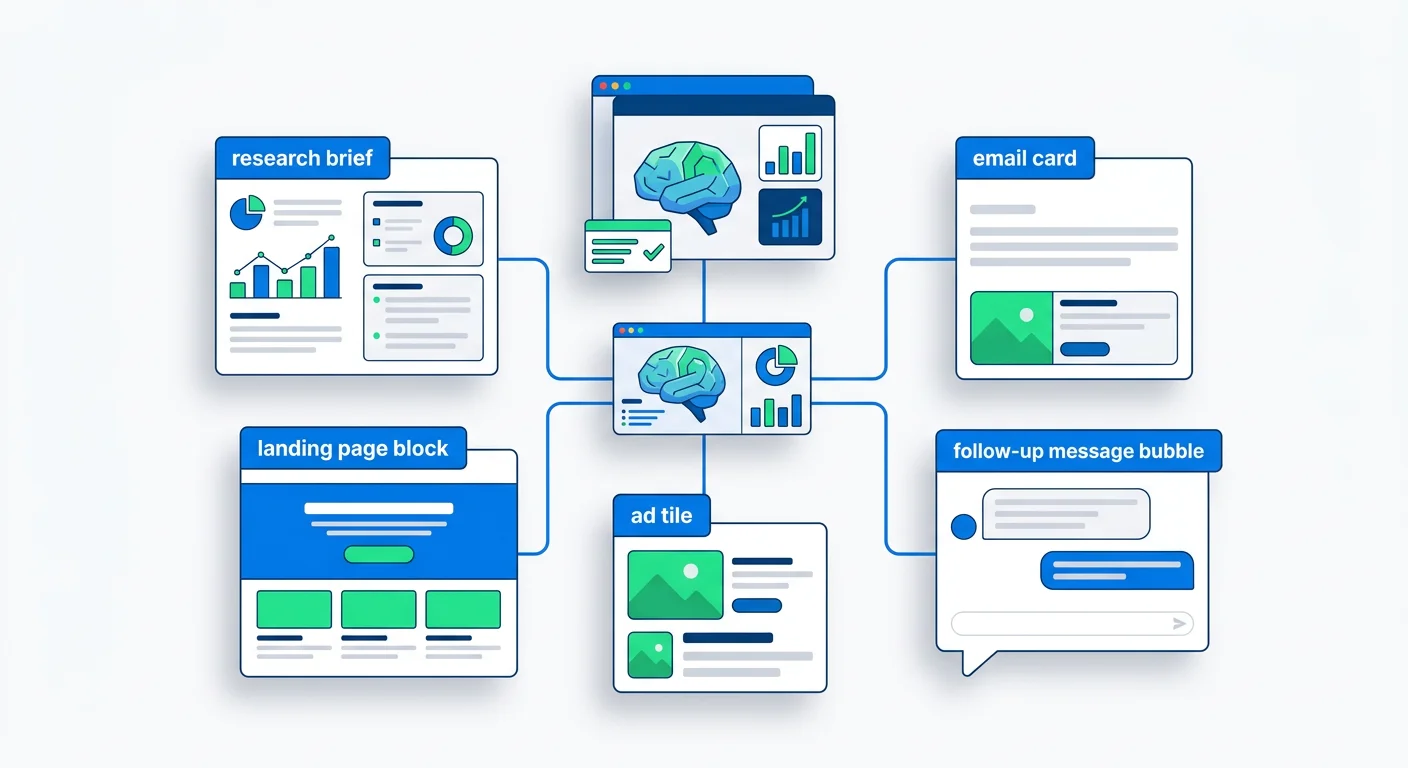
2. Simultaneous Asset Creation: Once the strategy is approved, coordinated AI specialists generate the necessary assets concurrently. The AI copywriter drafts the high-converting landing page text, the AI designer structures the visual layout, and the conversion agent builds the dynamic qualification forms. Because these AI agents share a unified context window within the same platform, the messaging remains perfectly consistent and aligned from the initial ad click to the final post-submission thank-you page.
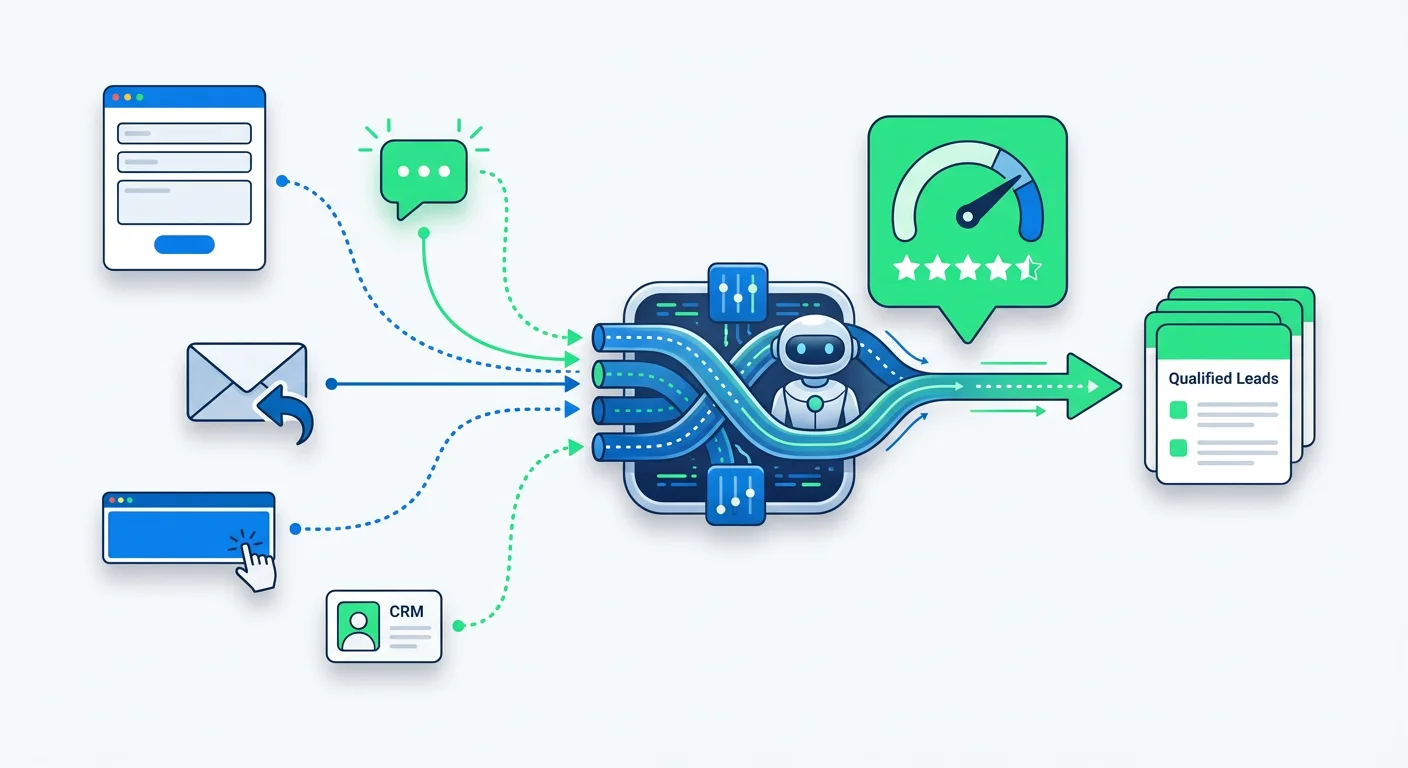
3. Live Deployment and Intelligent Routing: When the campaign goes live, the system actively routes incoming traffic. It doesn't just passively collect contact data into a spreadsheet; it makes active, intelligent decisions. High-value, perfectly qualified leads are instantly handed off to the sales team via direct calendar embeds or immediate Slack/CRM notifications, ensuring zero delay. Conversely, lower-tier leads are automatically pushed into relevant automated email sequences to build trust over time.
4. Continuous, Closed-Loop Optimization: Finally, the AI lead generation workflow is inherently cyclical. The intelligent system continuously monitors conversion rates across the entire funnel. If the landing page hook is converting well but the form drop-off rate is unusually high, the system can autonomously suggest adjustments to the form length, modify the qualifying questions to reduce friction, or pivot the follow-up messaging to reclaim lost prospects.
1. Dynamic Qualification Over Static Forms
Static forms are the enemy of high conversion rates. Asking a Fortune 500 decision-maker the exact same sequence of ten questions that you ask a curious student creates unnecessary friction.
Instead, an AI-powered system adapts in real-time. Using intelligent Forms & Qualification features, your landing pages can adjust their routing logic based on the prospect's input. For example, if a user selects an enterprise budget range, the system can instantly bypass the remaining basic questions and route them directly to an embedded calendar to book a demo. Conversely, unqualified or lower-budget traffic can be seamlessly routed to a self-serve webinar or nurture sequence. This premium, conditional flow dramatically improves perceived product quality and pipeline velocity.
To illustrate, consider a B2B SaaS company that targets both small businesses and large enterprise clients. When a visitor lands on their AI-generated page and begins engaging with the form, the system starts by asking for their company size. If the user selects '1-50 employees,' the dynamic routing logic immediately triggers a lower-friction, automated path. It might simply ask for an email address to send a recorded product demo, subsequently dropping them into a 14-day automated nurture sequence designed to encourage a self-serve checkout.
However, if a different user selects '500+ employees,' the system instantly recognizes the high-value intent. It dynamically alters the next step in real-time, bypassing the generic email capture and instead displaying a direct calendar embed to book a call with the Enterprise Sales Director. Simultaneously, it fires a priority alert to the sales team's Slack channel with the prospect's enriched company data. This conditional, multi-tiered approach ensures absolutely zero friction for VIP prospects while efficiently filtering out and automating the unqualified volume.
2. Unifying Pages, Funnels, and Campaigns
Building a successful AI-driven lead generation campaign means your pages, forms, and emails are inherently aware of each other. With integrated AI Pages & Funnels, you are no longer managing isolated assets.
When AI specialists build your campaign, the initial hook on the landing page directly informs the messaging in the qualification form, which in turn writes the contextual automated follow-up email. If a prospect abandons a form halfway through, the system knows exactly what context to include in the automated SMS or email to pull them back in. There are no handoffs or messy tool integrations—just one cohesive, high-converting journey.
3. Speed-to-Lead and Intelligent Automation
Study after study in B2B sales proves that the highest conversion rates occur when a lead is contacted within the first five minutes of submitting their information. Wait 30 minutes, and the odds of qualifying that lead drop by a staggering 21 times.
AI eliminates operational delay entirely. Once a prospect completes a form, AI Automation takes over immediately. It deploys personalized emails that reference the exact problems the lead indicated in the form, sends perfectly timed SMS reminders for booked calls, and notifies your sales team via Slack or email with a complete summary of the lead's intent.
Comparing the Approaches: Traditional vs. AI Lead Generation
| Capability | The Traditional Stack | Modern AI Lead Generation |
|---|---|---|
| Speed to Market | Takes weeks. Requires a copywriter, designer, operations specialist, and manual QA. | Takes minutes. Built instantly by coordinated AI agents working from a single prompt. |
| Lead Qualification | Static, rigid forms. Every prospect faces the exact same questions regardless of intent. | Dynamic, adaptive routing. High-intent buyers skip the line; lower-tier leads are automated. |
| Tool Fragmentation | Extremely high. Combines separate page builders, form tools, Zapier, CRMs, and email senders. | Zero fragmentation. Pages, forms, ads, and email sequences live natively in one platform. |
| Follow-up Velocity | Slow. Often takes hours to days for a manual handoff, killing conversion rates. | Instantaneous. AI automation triggers personalized emails and SMS the exact second a form is submitted. |
| Campaign Optimization | Manual A/B testing, disconnected analytics, and human guessing to find the bottleneck. | Closed-loop adjustments. AI analyzes drop-offs and seamlessly aligns ad creative with landing page copy. |
Closing the Loop: Meta Advertising and Traffic Injection
A highly optimized, AI-generated funnel is only half the battle; you still need to feed it with qualified traffic. Traditionally, managing the ad accounts was completely decoupled from managing the landing page conversion rate.
This is where Meta ad automation becomes a critical component of the AI growth engine. By utilizing integrated Meta Advertising within a single platform, AI marketing agents can ensure that the ad creative directly matches the landing page headline, and that the audience targeting aligns with the form qualification criteria. This closed-loop system means that when a campaign underperforms, the AI can adjust the ad copy, the page layout, and the follow-up sequence simultaneously, rather than a human media buyer trying to guess where the drop-off is occurring.
Replacing Your Fragmented Stack
To scale your revenue without perpetually scaling your headcount, you have to consolidate. Stitching together point solutions is a liability that slows down your marketing velocity and introduces points of failure at every integration step.
By moving to a unified platform powered by specialized AI agents like Superpage, you gain speed, consistency, and a massive competitive advantage. You are no longer managing software; you are managing outcomes.
-
Launch Complete Campaigns Faster Move from a campaign idea to a live, interconnected funnel—ads, pages, and emails—in minutes, not weeks.
-
Improve Lead Quality Dynamically Use smart forms that adjust to prospect answers, ensuring you only spend sales time on qualified buyers.
-
Consolidate Software Costs Replace your expensive page builder, separate form tool, and basic email automation platform with one cohesive system.
Frequently Asked Questions About AI Lead Generation
What is the difference between a traditional AI chatbot and an AI lead generation system?
A traditional AI chatbot is simply a single conversational interface that sits on top of an existing, disconnected website to answer basic questions or collect emails. In contrast, an AI lead generation system orchestrates the entire marketing funnel. It builds the actual landing pages, generates the dynamic forms, creates the ad campaigns, and handles the backend email and SMS automation in a fully unified ecosystem.
Will an AI lead generation platform integrate with my existing CRM?
Yes. While the goal of a platform like Superpage is to replace your fragmented top-of-funnel marketing stack (page builders, form tools, email senders), it is designed to seamlessly pass clean, fully qualified lead data directly into your core CRM (like Salesforce or HubSpot) so your sales team can operate without interruption.
How exactly does AI improve lead qualification?
AI improves qualification by eliminating the "one-size-fits-all" approach to lead capture. By using dynamic forms, the AI adapts its questions in real-time based on the answers the prospect is providing. It instantly identifies VIP buyers and routes them to a direct calendar booking, while filtering out low-budget or unqualified traffic into automated, self-serve nurture sequences.
Can AI lead generation be used for B2B enterprise sales?
Absolutely. In fact, B2B enterprise sales teams see some of the highest ROI from AI lead generation. Because enterprise deals require a high touch and specific qualification criteria, the ability for an AI system to instantly identify a Fortune 500 decision-maker and bypass standard forms to directly book a meeting with a senior Account Executive is an incredible competitive advantage.
Lead generation shouldn't be an operational bottleneck. When you allow coordinated AI specialists to handle the heavy lifting of campaign execution, data routing, and immediate follow-up, your growth team can finally return their focus to where it belongs: closing deals, refining market strategy, and scaling revenue.