
Looking for ClickFunnels alternatives usually starts with a practical frustration: you are paying for features you rarely use, you only need a landing page, or your leads disappear somewhere between the form and the sales conversation. Those are different problems—and they call for different tools.
This guide compares nine platforms by the job you need done. Some belong on your shortlist for funnel building and commerce. Others replace only the page, CRM, or follow-up part of your workflow. Superpage fits a different need: coordinating campaigns and moving leads toward qualified opportunities.
What ClickFunnels is best at
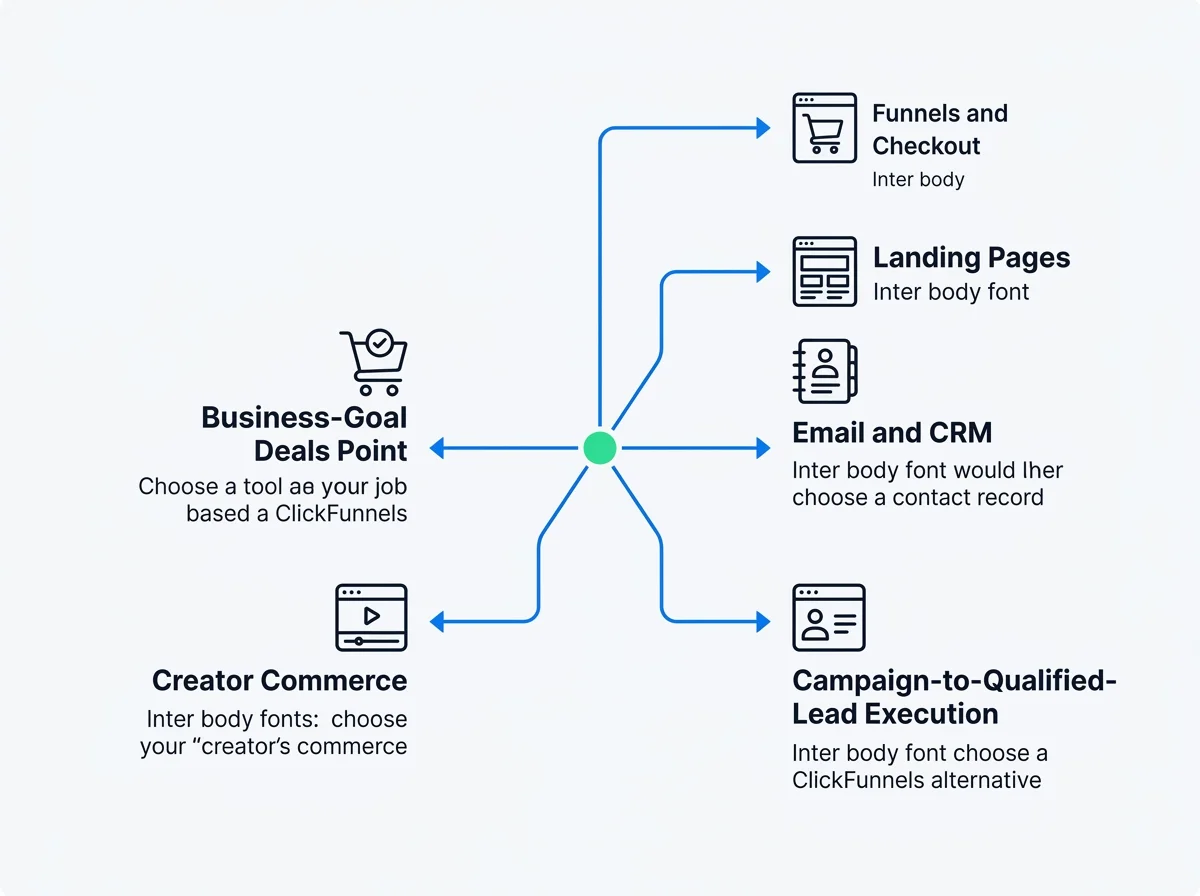
ClickFunnels describes its platform around sales funnels: drag-and-drop pages and templates, native checkout, order bumps, one-click upsells and downsells, email marketing, CRM functions, and course, membership, and digital-product delivery. Its Customer Center supports post-purchase content access.
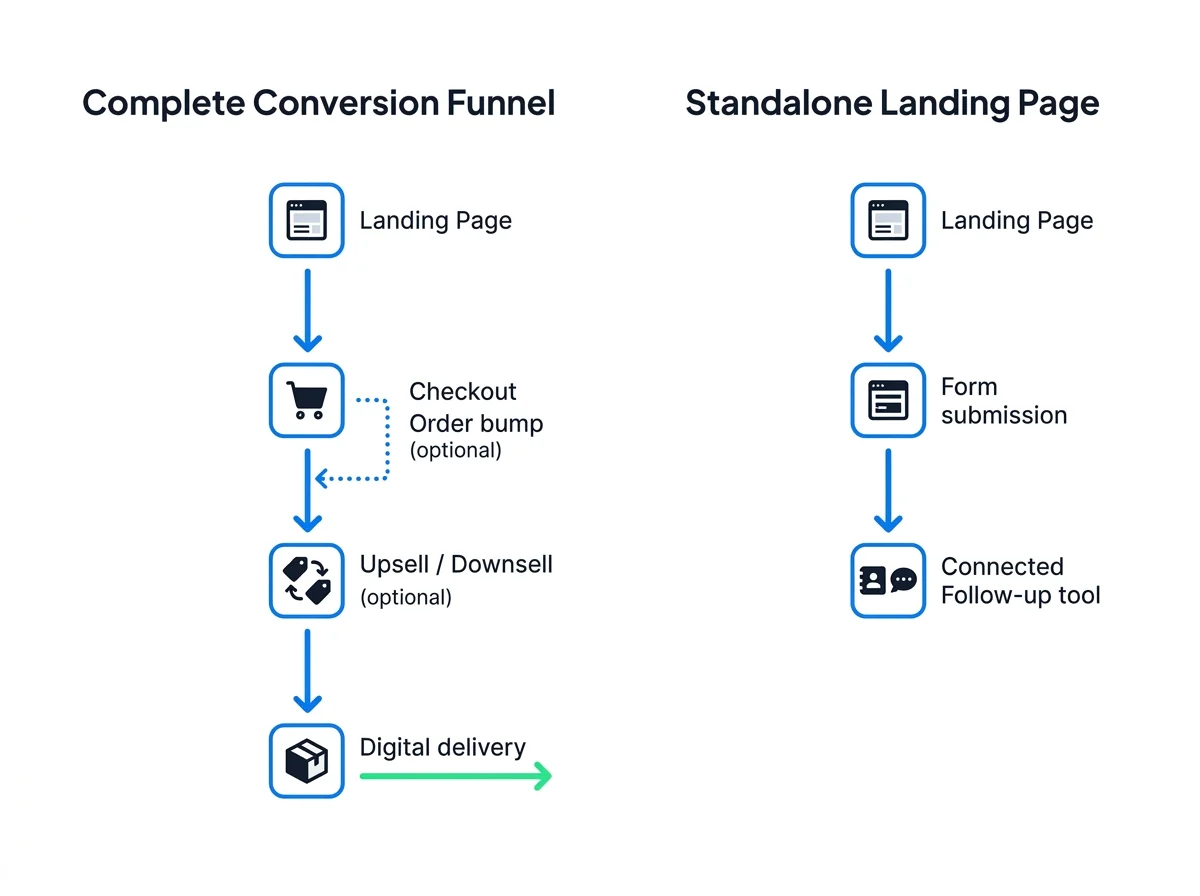
That combination fits a clear workflow: someone reaches a landing page, buys, sees another offer, pays, and accesses what they purchased. If that is the heart of your business, checkout mechanics and delivery matter as much as page design.
Businesses look elsewhere when the daily work changes. They may want simpler pages, a different ownership or pricing model, more CRM-focused operations, or less complexity. Others are concerned about page performance or are buying a broad funnel suite while using only a small part of it.
Do you need a better way to sell through a funnel—or a better way to turn campaign activity into qualified conversations?
Keep that distinction visible as you compare. A landing-page builder is a partial alternative. A checkout platform solves a commerce problem. A campaign platform addresses acquisition, qualification, and follow-up. None automatically replaces every part of the others.
Quick comparison: nine alternatives by job
Use this table to build a shortlist. The final column highlights the workflow your decision should revolve around, rather than treating every tool as an interchangeable replacement.
| Platform | Best-fit job | Decision focus |
|---|---|---|
| Kartra | Broader all-in-one funnel marketing | A connected funnel and marketing workflow |
| Systeme.io | Simpler all-in-one funnel marketing | How much of the funnel and follow-up you need together |
| ThriveCart | Checkout and digital-product commerce | The purchase path, upsells, and delivery requirements |
| Leadpages | Landing pages and lead capture | The page rather than an entire commerce funnel |
| Unbounce | Landing-page and paid-traffic optimization | Converting traffic on campaign pages |
| Kajabi | Courses, memberships, and creator delivery | The customer experience after purchase |
| GoHighLevel | Agency CRM, booking, and automation | Client accounts and ongoing lead operations |
| HubSpot | CRM-centered marketing and pipeline reporting | Contact context and sales progression |
| Superpage | Campaign-to-opportunity execution | Research, acquisition, qualification, follow-up, and booking |
The best ClickFunnels alternatives by use case
1. Kartra: for broader all-in-one funnel marketing
Kartra belongs on the shortlist when you want to stay in the all-in-one funnel and marketing category. It is a more relevant comparison for a business replacing a connected marketing workflow than for someone who simply needs a single campaign page.
Start by mapping the journey you already operate: entry page, offer, conversion, follow-up, and customer handoff. A broad platform makes sense when you use several of those parts together. Otherwise, changing suites can leave you with the same overbuying problem under a different name.
Choose this direction when: you want another broad funnel-and-marketing platform rather than a specialist page or CRM tool.
2. Systeme.io: for a simpler all-in-one shortlist
Systeme.io is another all-in-one funnel and marketing alternative. It is a useful candidate when your goal is to simplify the operating setup while keeping funnel building and marketing follow-up in the same buying decision.
For an email-led business, write down what happens after a signup: which sequence starts, what information changes the message, and what action ends the sequence. That exercise separates a straightforward funnel-and-email need from a deeper CRM or qualification workflow.
Choose this direction when: you need a manageable funnel and follow-up setup, not a separate specialist for every task.
3. ThriveCart: for checkout and digital-product selling
ThriveCart is a checkout-first alternative, with an emphasis on checkout, upsells, and digital-product selling. That makes it relevant when the purchase experience—not campaign research or sales qualification—is the bottleneck.
Think through the transaction in order: initial product, additional offer, completed payment, and access to the purchase. If your acquisition pages already do their job, replacing the checkout portion can be a more focused decision than rebuilding the whole marketing stack.
Choose this direction when: the next important improvement is in the buying journey. Treat it as a commerce-centered choice, not a universal marketing replacement.
4. Leadpages: for landing pages and lead capture
Leadpages fits businesses that primarily need landing pages. If your campaign ends with a signup or inquiry and you already handle follow-up elsewhere, a page-focused tool is a sensible category to consider.
The key question is where the page hands off. A simple lead-capture page can be enough for a newsletter or a single offer. A business that also needs multi-step checkout, course access, or complex lead operations has a broader decision to make.
Choose this direction when: you need a focused page-building workflow more than a complete funnel-and-delivery system.
5. Unbounce: for paid-traffic landing-page optimization
Unbounce belongs in the landing-page and paid-traffic optimization category. It is a relevant shortlist option when the work centers on converting visitors arriving from paid campaigns.
Separate two problems: getting more visitors to take action on the page, and getting the resulting leads qualified and booked. Page optimization addresses the first. Acquisition planning, follow-up, attribution, and pipeline operations make the second a wider workflow.
Choose this direction when: the campaign page is the main conversion bottleneck and the surrounding lead process is already handled.
6. Kajabi: for courses, memberships, and creator delivery
Kajabi is a relevant alternative for creators whose business revolves around courses, memberships, and the experience customers receive after buying. Here, delivery is part of the core product—not an afterthought to the sales page.
Map what customers need after payment: access to content, a clear starting point, and the right membership or learning journey. Compare creator-oriented platforms against that experience. A lead-generation tool is the wrong category if your main requirement is delivering paid content.
Choose this direction when: the purchase leads into a course or membership experience that you need to operate day to day.
7. GoHighLevel: for agency CRM, booking, and automation
GoHighLevel fits the agency-operations side of this comparison: CRM, client accounts, booking, and automation. It is relevant when managing leads and client workflows matters more than running a commerce-centered funnel.
For an agency, the practical test is repeatability. Outline the stages each client needs, who handles new inquiries, how booking fits, and which follow-up steps recur. This is a different evaluation from comparing checkout offers or digital-product access.
Choose this direction when: client-account management and ongoing lead operations are central to your business.
8. HubSpot: for CRM-centered marketing and pipeline reporting
HubSpot is a CRM-centered alternative for marketing and pipeline reporting. It belongs on the shortlist when you need the customer record and sales process to be the organizing point of your stack.
An email-first evaluation should look beyond writing and sending messages. What contact context should inform the next message? When does marketing hand the lead to sales? Which pipeline stage determines the next action? Those questions help you distinguish simple nurture sequences from CRM-led marketing operations.
Choose this direction when: contact management, marketing follow-up, and visibility into sales progression are the primary requirements.
9. Superpage: for campaign-to-opportunity execution
Superpage fits businesses that need to connect the work before and after the landing page. Its center of gravity is campaign research, acquisition, conversion, qualification, follow-up, and movement toward a qualified opportunity.
That starts with campaign research and positioning, supported by persistent brand memory. Superpage builds pages, funnels, forms, and qualification flows, and supports Google Ads execution with keyword research and CAPI implementation alongside Meta Ads execution.
After lead capture, contextual email and SMS follow-up, CRM and pipeline workflows, and calendar booking support lead progression. AI voice appointment setters add an appointment-setting path.
For optimization, Superpage uses actual session recordings for session-recording-based CRO and supports first- and last-touch attribution. Campaign canvas and analytics help organize the wider operation, while content and search discovery extend acquisition beyond a transactional funnel.
Choose this direction when: your problem is coordinating campaigns and advancing leads—not replacing checkout, upsells, or a course platform.
Superpage vs. ClickFunnels: different operating centers
Both platforms cover pages, funnels, forms, lead capture, conversion workflows, and follow-up. The useful distinction is what the business needs those pieces to accomplish.
- ClickFunnels is funnel- and commerce-centered: its strengths include dedicated checkout, order bumps, one-click upsells and downsells, courses, memberships, and digital-product delivery.
- Superpage is campaign- and opportunity-centered: its fit is research, Google and Meta acquisition, qualification, contextual follow-up, attribution, CRO, pipeline progression, booking, and AI voice appointment setting.
Superpage is not a like-for-like replacement for ClickFunnels checkout, order bumps, upsells, downsells, courses, memberships, or digital-product delivery. If those are your core requirements, keep a commerce- or creator-delivery platform at the center of the decision.
If the conversion you care about is a qualified lead or booked conversation, evaluate the entire path from campaign idea to sales handoff. A better page alone does not address every gap in that journey.
How to choose without overbuying
- Name the conversion event. Is success a payment, email signup, qualified opportunity, or booked appointment?
- Define what happens afterward. Payment may require course or product delivery. A lead may require qualification, nurture, booking, and a pipeline handoff.
- Locate the bottleneck. Is it the page, checkout, lead quality, follow-up, or coordination across campaigns?
- Choose the smallest suitable category. Do not replace an entire stack to solve a single page problem—or choose only a page tool for a wider acquisition problem.
- Compare the daily workflow. Include software costs, rebuilding effort, and the time needed to operate the process. A shorter feature list can still be the better fit.
Migration checklist: protect the workflow, not just the pages
A migration is more than copying designs. Preserve the information and handoffs that make the customer journey work.
- Inventory active assets: pages, forms, campaigns, tracking, automations, CRM stages, and follow-up sequences.
- Separate rebuilds from data moves: page layouts and automation logic need different treatment from contacts and historical records.
- Document commerce and delivery dependencies: include checkout offers, purchased content, and customer access wherever they are part of your workflow.
- Preserve lead-source context: carry acquisition information into the new process so attribution and sales context remain useful.
- Test the complete journey: form submission, qualification, follow-up, booking, notifications, and pipeline handoffs.
- Check stop conditions: booking or changing status should end messages that no longer apply.
- Switch the primary workflow after testing: keep the old journey available while the new one is being put through its paces.
Frequently asked questions
What is the best ClickFunnels alternative?
There is no universal winner. Kartra and Systeme.io fit an all-in-one funnel shortlist; ThriveCart fits checkout-centered selling; Leadpages and Unbounce fit page-focused needs. Kajabi fits creator delivery, GoHighLevel fits agency operations, HubSpot fits CRM-centered marketing, and Superpage fits campaign-to-qualified-lead execution.
How should I choose a free or lower-cost alternative?
First narrow the requirement. A standalone landing-page need is different from checkout, course delivery, or a complete lead operation. Compare the cost of the workflow you need, including separate tools and rebuilding effort, rather than choosing on the entry price alone.
Which alternative is best for paid ads?
Leadpages and Unbounce belong on a page-focused shortlist. Superpage fits the broader operation: campaign research, Google Ads keyword research and CAPI implementation, Meta Ads execution, qualification, attribution, session-recording-based CRO, and follow-up toward an opportunity.
Which alternative is best for courses or memberships?
Kajabi is a relevant creator-delivery option. ClickFunnels also supports courses, memberships, and digital-product delivery. Keep post-purchase access central to the decision; Superpage is not a course or membership replacement.
Is Superpage a ClickFunnels replacement?
Yes, for some lead-generation workflows involving pages, acquisition, qualification, contextual follow-up, booking, pipeline progression, and appointment setting. No, when the primary requirement is dedicated checkout, order bumps, upsells, downsells, courses, memberships, or digital-product delivery.
Is ClickFunnels a CRM?
ClickFunnels includes CRM and contact functions within its funnel-centered platform. The decision is whether those functions fit your workflow or whether you need a CRM-centered or campaign-to-opportunity operating model.
Can I use Superpage for landing pages and funnels?
Yes. Superpage supports AI pages and funnels, forms, and qualification flows. Its broader workflow connects lead capture to acquisition, follow-up, booking, and pipeline activity.
Which is better for lead generation: ClickFunnels or Superpage?
ClickFunnels fits a funnel-led lead or sales path. Superpage fits a broader lead-generation operation involving campaign research, paid acquisition, qualification, attribution, follow-up, booking, and pipeline progression. Choose around the work your team needs to run—not a universal ranking.