
Looking for Instapage alternatives? Start with what you want to change. A lower page-builder bill, easier testing, and better lead follow-up are three different needs. They do not always point to the same tool.
Instapage is built for the path from an ad click to a landing-page conversion. Some alternatives focus on that same job. Others add funnels, sales tools, or a wider campaign workflow. This 2026 guide separates those groups so you can build a shortlist that fits.
What is the best Instapage alternative?
The best Instapage alternative is the one that solves the job you are replacing. If your team already has a solid CRM and follow-up process, another landing-page builder may be enough. If leads get lost after the form, a new editor alone will not fix that gap.
Choose for the part of the campaign that breaks—not just the page you see.
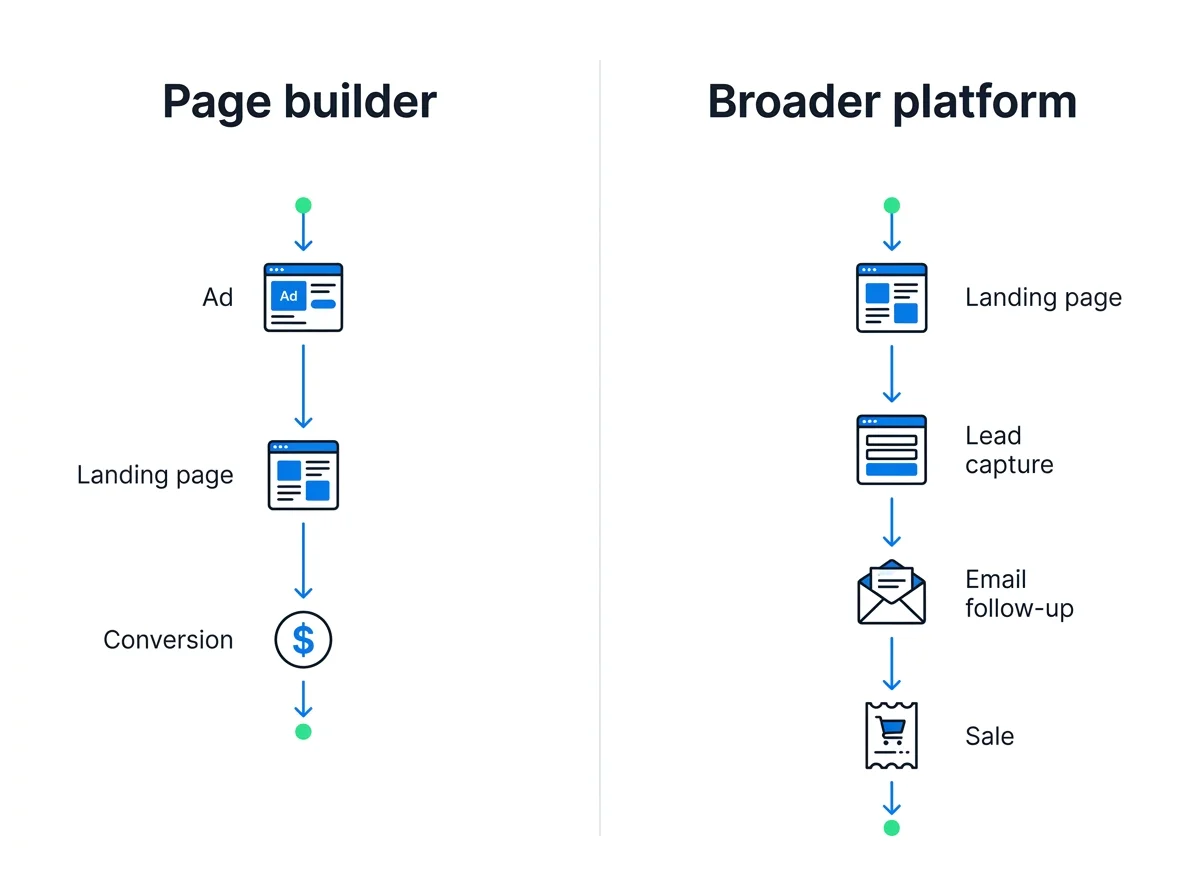
Keep two shortlists: direct page builders and broader platforms. That makes the trade-offs easier to see. A tool built for checkout is not the same kind of replacement as a tool built for page review and ad personalization.
What Instapage does well
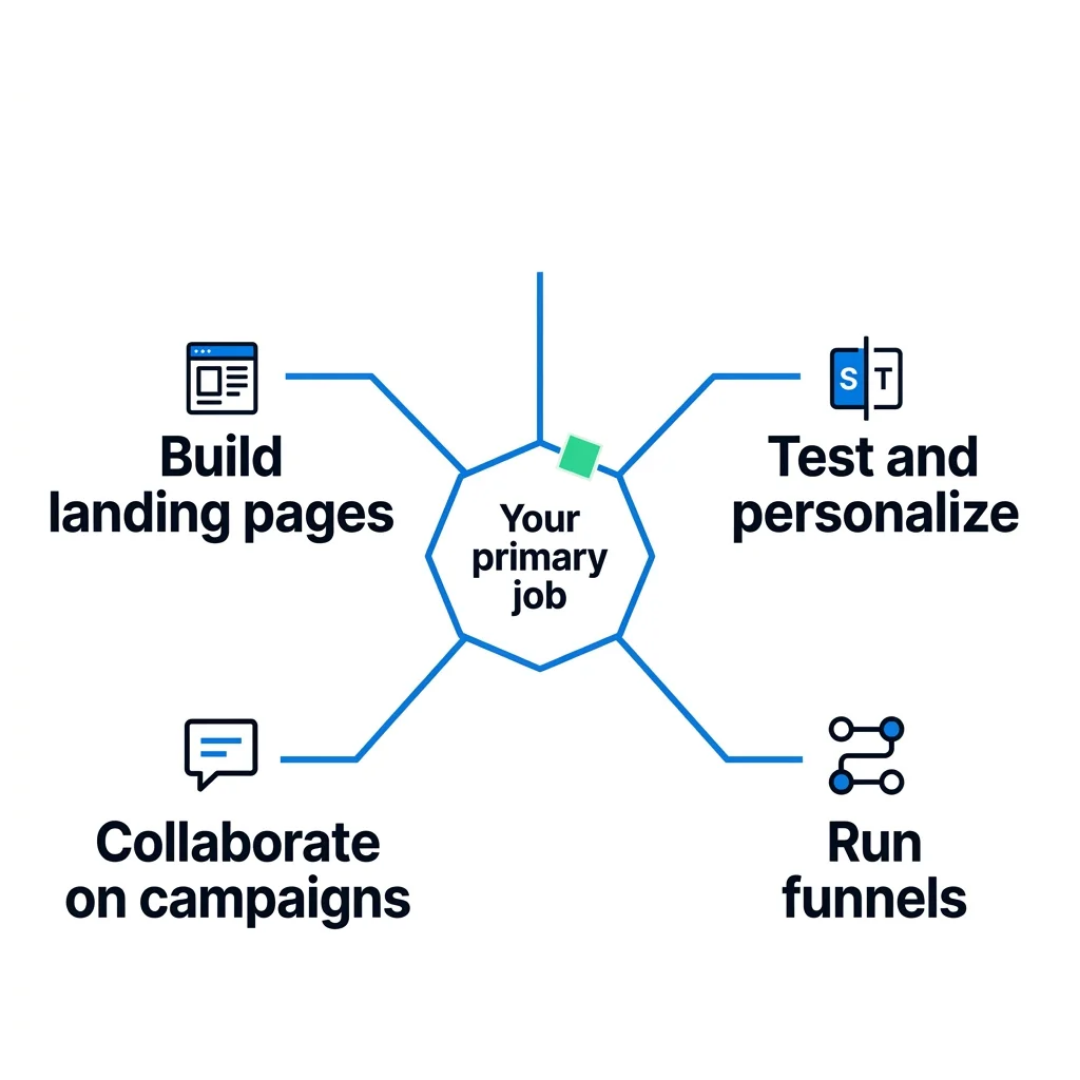
Instapage is a hosted landing-page and conversion-optimization platform. Its core strength is ad-to-page execution: helping teams build, review, publish, personalize, and test the pages used in paid campaigns.
- Hosted page creation: AI-assisted creation, templates, reusable blocks, and publishing on a custom domain.
- On-page collaboration: comments, reviews, edits, and approvals help teams work on campaign pages.
- AdMap: connects advertising campaigns with relevant landing-page experiences.
- Personalization: dynamic text and visuals can use URL or campaign parameters.
- Experimentation: A/B testing supports page-level conversion work.
- Connections to other tools: integrations link pages with advertising, analytics, CRM, and marketing automation.
These strengths matter. If you depend on shared page approvals or close ad-to-page matching, make those needs central to your comparison. Broader software can cover more of your workflow without taking the same approach to specialist page work.
Why teams look for alternatives
Cost is one reason, but it is rarely the whole story. Teams also want a simpler way to publish pages, testing that fits their budget, or tools that reach beyond the form submission.
- The plan cost no longer fits campaign traffic.
- The team needs testing on a different plan or budget.
- A funnel needs checkout, upsells, or course delivery.
- Leads need qualification, booking, and follow-up.
- Campaign reports need to connect with CRM and pipeline work.
- The business wants a WordPress or wider website workflow.
Write down your main reason before comparing tools. Otherwise, a low entry price or a long feature list can pull you away from the problem you meant to solve.
Instapage alternatives compared by job
Use this table to choose a category first. The last column names the trade-off to examine, rather than treating every product as a direct swap.
| Platform | Category | Best-fit job | Main decision point |
|---|---|---|---|
| Unbounce | Direct landing-page builder | A close page-focused comparison | Testing, traffic capacity, personalization, and team workflow |
| Leadpages | Direct landing-page builder | Small-business pages and lead capture | The cost of the plan with your testing and traffic needs |
| Landingi | Direct landing-page builder | Page production and agency workflows | Testing tier, traffic caps, and client workflow |
| Swipe Pages | Direct landing-page builder | Speed-focused and mobile campaigns | Mobile experience, testing, and traffic allowance |
| ClickFunnels / OptimizePress | Adjacent funnel and selling tools | Multi-step selling rather than only lead capture | Checkout needs and hosted versus WordPress workflow |
| HubSpot / GoHighLevel | Broader CRM and marketing suites | Marketing operations connected with lead management | CRM structure, automation, and team or agency needs |
| Webflow / Carrd | Adjacent website tools | Website design or simple one-page publishing | Whether website needs outweigh specialist page optimization |
| Superpage | Broader campaign-to-opportunity platform | Research, campaigns, qualification, booking, and pipeline | Whether you need to replace a fragmented workflow, not just an editor |
Best direct landing-page alternatives
Unbounce: start here for a close comparison
For an Instapage vs Unbounce decision, keep the focus on paid-campaign pages. Unbounce is the closest direct comparison on this shortlist. Compare your testing needs, monthly traffic, integrations, personalization needs, and page-review process.
Also separate manual A/B testing from AI traffic routing. They answer different questions: testing compares variants, while routing aims to send visitors to a suitable experience. Keep this evaluation tied to your Instapage workflow; the broader Unbounce alternatives guide covers a different starting point.
Leadpages: shortlist it for small-business lead capture
Leadpages belongs on a shortlist for straightforward pages and lead capture. For a small team, the key question is how much effort it takes to launch and maintain campaigns. Compare the plan that supports your testing needs and traffic—not just the least expensive tier.
Landingi: consider page production and agency needs
Landingi is worth considering for lower-cost page workflows and agency use. Keep templates, testing tiers, traffic caps, and client work in view. For Instapage alternatives for agencies, add a practical question: how will each client’s pages, leads, and team access stay organized?
Swipe Pages: focus on speed and mobile traffic
Swipe Pages is a useful shortlist option for speed-focused and mobile campaigns. Evaluate the page on a phone, not only in a desktop editor. Your decision should include testing, traffic allowance, and the effort needed to build a clear mobile form and call to action.
When funnels or broader platforms fit better
Funnel and commerce tools
ClickFunnels and OptimizePress belong in the funnel and selling category. Consider this group when the job includes a sales sequence, checkout, upsells, or course delivery. OptimizePress also brings a WordPress-based path into the decision.
These are adjacent alternatives, not the same type of tool as a specialist landing-page platform. Start with the steps a buyer needs to complete. For a wider funnel shortlist, see our ClickFunnels alternatives guide.
CRM and marketing suites
HubSpot and GoHighLevel fit a broader CRM and marketing-operations comparison. This category matters when a form submission needs to enter a managed lead process, rather than stop at a page report.
Keep agency operations and pipeline needs separate from page design. Our GoHighLevel vs Superpage comparison goes deeper into that choice.
Website and design platforms
Webflow, Carrd, and WordPress builders belong in a website shortlist. Consider them when your main goal is a wider site, design control, or simple one-page publishing. Keep page testing, ad matching, and lead handling as separate needs in your evaluation.
Where Superpage fits
Superpage is an AI marketing platform for researching, building, publishing, and optimizing campaigns across tools. It fits teams whose problem extends from getting traffic to turning leads into qualified opportunities.
- Before the page: market research and positioning shape the campaign.
- Acquisition: Google Ads keyword research and CAPI, plus Meta Ads workflows, sit alongside campaign building.
- Conversion: pages, funnels, forms, and lead qualification support the next step.
- Lead handling: contextual automation, booking, CRM, and pipeline management connect the response with sales work.
- Measurement: campaign analytics and first-touch and last-touch attribution help explain the path to conversion.
- Improvement: AI CRO uses actual session recordings to examine visitor behavior.
- Follow-up: AI Voice Agents call leads as appointment setters.
- Discovery: content and search discovery extend the workflow beyond paid campaign pages.
This makes Superpage relevant as an Instapage alternative for lead qualification, CRM, or campaign analytics. For example, a team may need to connect an ad, a qualifying form, a booked call, and a pipeline record. That is a workflow decision, not just a page-builder decision.
Explore forms and qualification, session-recording-based AI CRO, and AI Voice Agents to understand those parts of the workflow.
Superpage vs Instapage: different centers of gravity
Both address campaign pages, lead capture, and conversion improvement. Instapage centers on specialist page production, collaboration, AdMap-style ad-to-page coordination, personalization, and experimentation. Superpage centers on the broader path from research and campaign execution through qualification, booking, follow-up, and pipeline.
Choose Instapage’s specialist category when page approvals, personalized ad destinations, and page experiments are the core job. Choose a broader workflow category when disconnected lead handling is the bottleneck. Superpage’s AI CRO and campaign workflow serve a different role from Instapage’s specialist page-review, AdMap, and experimentation workflows.