

SaaS and B2B marketing teams are operating in a frustrating paradox. We have access to more specialized, hyper-focused software tools than at any point in history, yet launching a standard go-to-market campaign has never felt slower, more complicated, or more prone to breaking.
Think about the last time you launched a simple feature update, a webinar, or a new lead magnet. You likely needed a landing page builder to capture registrations, an email marketing platform to send the confirmation and nurture sequences, a separate automation tool (like Zapier or Make) to pass the data between the two, a CRM to store the new leads, and an ad platform to drive top-of-funnel traffic.
Before a single line of copy was approved or a single creative asset was reviewed, your team was already drowning in operational debt. This is the reality of the fragmented marketing stack: a web of disconnected point solutions that turns strategic, creative marketers into full-time software integrators.
What Exactly Is a Fragmented Marketing Stack?
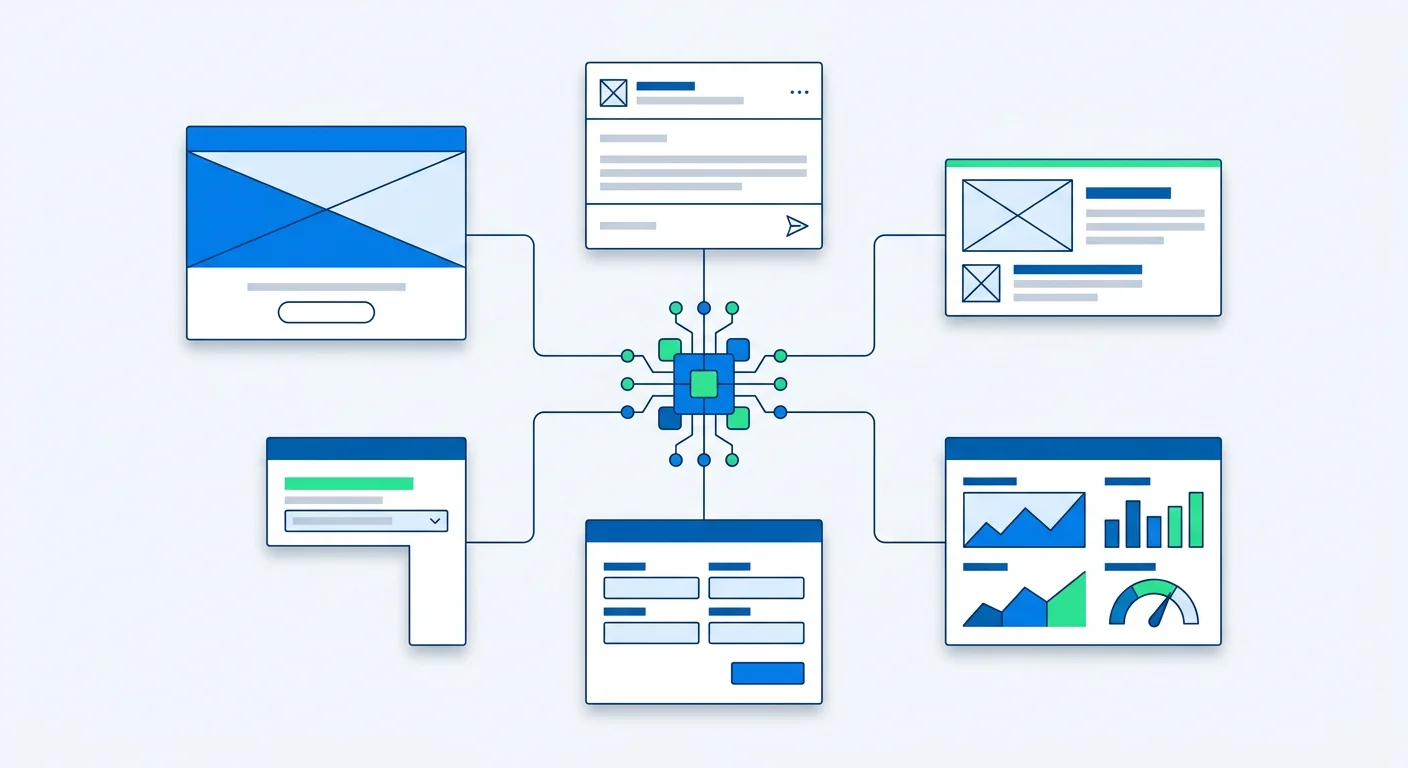
A fragmented marketing stack is an ecosystem of disconnected software applications where each tool handles a single, highly specific function of the customer journey, but lacks native, bidirectional communication with the rest of the stack. In this environment, marketers might use one platform for hosting landing pages, a separate application for designing and sending marketing emails, a third for managing paid media pixels, and a fourth for tracking analytics—with none of them sharing a unified underlying data model.
The defining characteristic of a fragmented stack is the heavy reliance on "middleware." To pass a captured lead from a form to an email sequence, teams are forced to use third-party integration tools or rely on custom-coded API webhooks. This architecture inherently creates a fragile operational web. When you add more capabilities, you don't just add a tool; you add exponentially more integration pathways that must be monitored, maintained, and continuously updated.
This fragmentation didn't happen maliciously. It usually occurs organically as a company scales. A startup begins with a simple all-in-one CRM, but as the marketing team expands, specialists demand more granular control. The SEO manager wants a specialized CMS. The performance marketer demands a standalone landing page builder to bypass the engineering queue. The lifecycle marketer procures a sophisticated email delivery system. Slowly, the operational architecture transforms into a siloed labyrinth, making it increasingly difficult to execute automated marketing campaigns smoothly and consistently.
Ultimately, a fragmented stack shifts the department's core competency away from customer acquisition and strategy, and toward software administration. The team becomes highly proficient at moving CSV files, troubleshooting API errors, and mapping field values across databases, rather than writing compelling copy or optimizing conversion rates.
The Evolution of the "Franken-Stack"
To understand how to fix the problem, we first have to understand how we got here. Over the last decade, the SaaS explosion led to the "best-in-breed" philosophy. The logic was sound at the time: instead of buying one clunky, monolithic enterprise system that did everything poorly, teams should buy specialized tools that did one specific thing exceptionally well.
The result? Marketing departments began adopting separate tools for every micro-function. One tool for social scheduling, one for form building, one for A/B testing, one for checkout and payments, and one for reporting. While each tool was individually powerful, they were never natively designed to speak to one another.
We traded software capability for operational complexity. We built "Franken-stacks"—cobbled together arrays of software that require constant maintenance, custom APIs, and manual oversight just to keep basic funnels functioning.
The Hidden Costs of Disconnected Systems
When your marketing infrastructure is stitched together with custom APIs, webhooks, and duct-tape automations, the business pays a high tax. This "stack tax" usually manifests in highly destructive ways.
1. Slower Campaign Velocity
In a fragmented stack, stitching tools together takes days. You are forced to build campaigns sequentially because assets must be manually moved from one platform to the next. The copywriter finishes the email, hands it to the ops person to format in the ESP. The designer finishes the landing page mockup, hands it to a developer to build in the CMS. What should take a coordinated team an afternoon ends up taking three weeks of back-and-forth Slack messages.
2. Brittle Handoffs and Integration Failures
Every integration point in a fragmented stack is a potential point of failure. When a Zapier webhook fails, an API key expires, or a field name is changed in your CRM, leads fall through the cracks. Suddenly, your welcome emails stop sending, or your ad conversions stop tracking. Instead of optimizing conversion rates, your top marketing talent is stuck digging through error logs trying to find where the pipe broke.
3. The Attribution Nightmare
Reporting and attribution are nearly impossible when every tool grades its own homework. Your ad platform says it drove 50 conversions. Your landing page tool says it captured 30 leads. Your CRM only shows 15 new contacts. Because there is no single source of execution truth, marketing leaders are left trying to merge conflicting CSV exports in Excel just to understand their basic customer acquisition cost (CAC).
4. The Human Cost: Strategy vs. Administration
Perhaps the most damaging cost is what happens to your team. You hired brilliant strategists, creative writers, and data-driven media buyers. But in a fragmented stack, they spend 70% of their time acting as amateur IT administrators. They are managing software, not marketing to customers. This leads to burnout, low morale, and high turnover.
5. Subscription Bloat and Redundant Features
As the stack grows, so does the financial waste. Point solutions often expand their own feature sets over time in an attempt to capture more value. Your email marketing tool adds a landing page builder; your landing page builder adds an email autoresponder. Before long, you are paying for the same functionality three times across different platforms, simply because you are locked into each tool for one specific legacy feature. This subscription bloat quietly drains the marketing budget, leaving fewer dollars for actual ad spend or creative development. If you want to launch SaaS campaigns faster, freeing up that budget to invest in media and unified execution is paramount.
6. Security and Data Compliance Risks
In an era of strict data privacy regulations like GDPR and CCPA, a fragmented stack is a significant compliance liability. Every time customer data is passed from your form builder to your middleware, and then to your email platform, it creates a new node where data is stored and potentially exposed. Managing user consent, processing deletion requests, and ensuring consistent data governance becomes an operational nightmare when customer profiles are scattered across a dozen unlinked databases.
Why "Adding AI" to a Broken Stack Doesn't Work
Recognizing these pain points, many SaaS and B2B teams have rushed to layer AI tools on top of their existing stack in an attempt to move faster. But there is a massive conceptual flaw in this approach: standalone AI text generators and prompt interfaces only speed up isolated tasks.
Generating landing page copy in ten seconds feels highly productive. But if you still have to manually copy that text, log into your CMS, build the blocks, paste the text in, adjust the mobile responsiveness, set up the tracking pixels, configure the form routing, and test the integrations... you haven't actually accelerated your campaign. You just created content faster for a bottlenecked system.
Isolated AI tools are not the solution to a fragmented stack. They often make it worse by increasing the sheer volume of assets that need to be manually deployed. What teams actually need is not isolated AI generation, but coordinated campaign execution.
"Speeding up content creation doesn't matter if your deployment process is still bottlenecked by five different software platforms. You need AI that executes, not just AI that writes."
The Consolidation Framework: Audit, Keep, Replace
If you are feeling the operational drag of a bloated marketing stack, it is time to conduct a ruthless audit of your tools. The goal is not just to save on monthly subscription costs (though that is a nice side effect), but to radically increase your team's agility. We recommend a straightforward, three-step framework:
-
1
Protect your system of record Your core CRM (like Salesforce, HubSpot, or a specialized backend database) should remain the single source of truth for all customer data. Consolidating your execution stack does not mean ripping out the foundational database where your sales team operates. Keep this intact.
-
2
Identify and sunset isolated point solutions Look critically at the edges of your stack. Do you have a standalone landing page builder? A separate tool just for exit-intent popups? A standalone email blast platform? A separate tool for building forms? These are the prime culprits for operational drag. Target these for replacement.
-
3
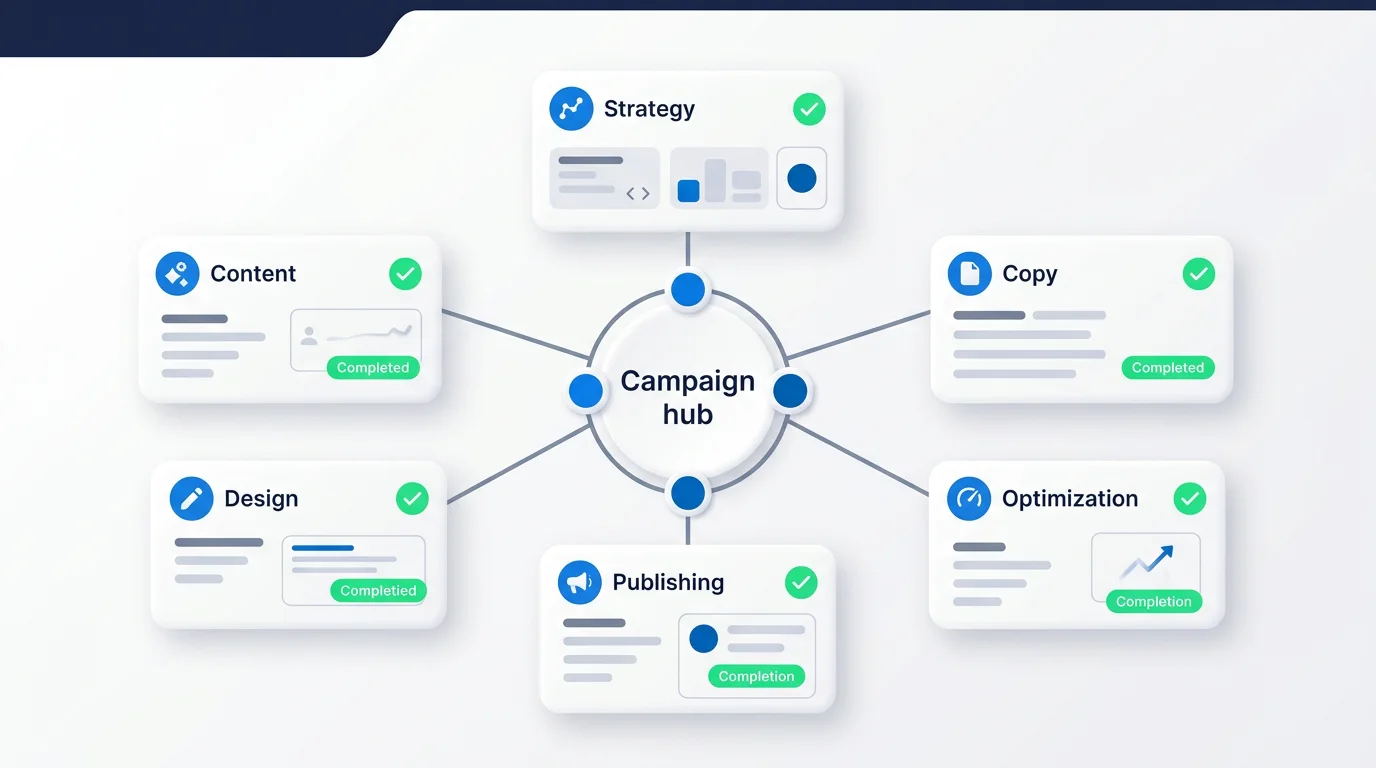
Consolidate into an active execution layer Move all of your active campaign work—the pages, the emails, the automated follow-ups, and the ad integrations—into a unified environment. When these elements live in the same system natively, you eliminate the need for complex middleware and broken integrations.
Once you have identified these three categories, it is critical to evaluate the true cost of keeping a tool versus the perceived friction of migrating away from it. Many teams fall victim to the sunk cost fallacy, holding onto a complex email platform simply because they spent months setting it up three years ago.
A proper stack audit requires a ruthless look at utilization. Ask your team: What percentage of this tool's features do we actually use on a weekly basis? In most cases, teams pay enterprise tier pricing for a highly specialized tool but only utilize its most basic functions—functions that are easily replaced by a unified, AI marketing automation for SaaS platform.
Fragmented Stack vs. Consolidated Platform
| Evaluation Area | The Fragmented Stack | Consolidated AI Platform |
|---|---|---|
| Deployment Speed | Weeks. Requires sequential handoffs between copywriters, designers, and ops. | Minutes. Coordinated agents build assets simultaneously. |
| Data & Attribution | Siloed. Requires manual CSV exports and conflicting dashboard metrics. | Unified. One source of execution truth across ads, pages, and emails. |
| Maintenance Overhead | High. Constant monitoring of webhooks, API limits, and broken Zaps. | Near Zero. Native integration eliminates middleware breakage. |
| Team Focus | Software administration, troubleshooting, and manual data entry. | Strategic positioning, creative testing, and revenue optimization. |
Step-by-Step: How to Consolidate Your Marketing Operations
The prospect of ripping out existing software can be intimidating. However, a structured, phased approach minimizes risk and ensures that live campaigns continue running while you transition to a more agile framework. Here is how to execute a successful stack consolidation.
Step 1: Map Your Critical Asset Pathways
Before canceling any subscriptions, document exactly how data flows through your current setup. Trace the journey of a single lead. Where do they enter? Which tool captures the form data? What middleware passes that data? Which system sends the welcome email? Understanding these dependencies ensures you don't inadvertently break a critical revenue funnel during the transition.
Step 2: Replicate the Funnel in the Unified System
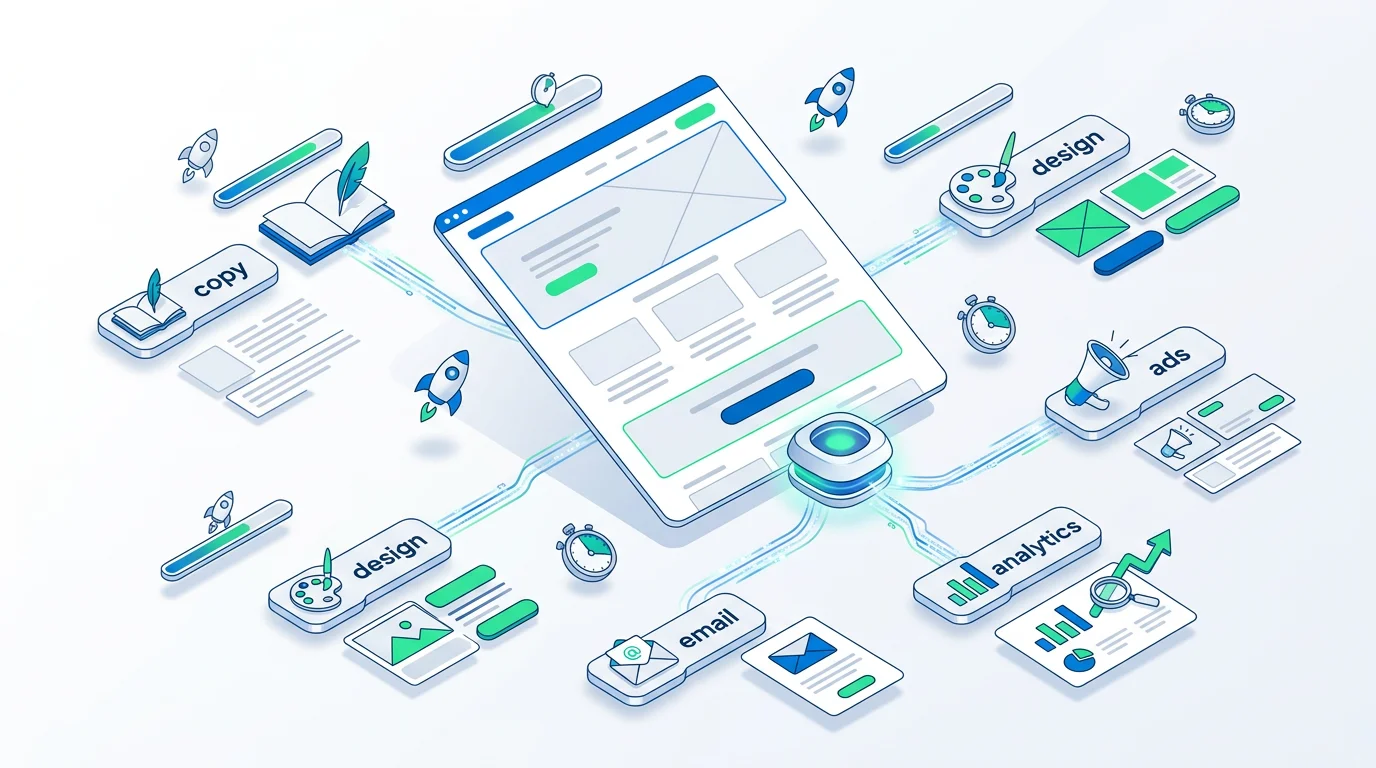
Instead of a massive overnight migration, choose one upcoming campaign or one underperforming historical funnel. Rebuild this specific funnel entirely within your new consolidated platform. If you are leveraging AI marketing agents, you can generate the landing page, email sequences, and form logic simultaneously in a fraction of the time it would take manually.
Step 3: Route Traffic and Validate Data
Once the test funnel is built, split your ad traffic or direct a specific cohort of email subscribers to the new consolidated flow. Monitor the data capture. Ensure that leads are flowing directly into your protected system of record (your main CRM) without the need for middleware or duct-taped integrations.
Step 4: Expand and Sunset
After successfully validating the first campaign, begin systematically porting over your evergreen assets. Move your standard webinar registration flows, your ebook download sequences, and your demo request pipelines. As each function is natively handled by the consolidated system, you can safely sunset the isolated point solutions (the standalone landing page builders, the disjointed form plugins, the single-purpose popup tools) and cancel those subscriptions.
Frequently Asked Questions About Stack Consolidation
Does consolidation mean I have to replace my core CRM?
No. A successful consolidation strategy targets the execution and deployment layer—the tools you use to build pages, send emails, and capture leads. Your foundational CRM (like Salesforce, HubSpot, or a custom backend) remains intact as your company's ultimate system of record. The goal is to replace the chaotic web of point solutions that sit in front of the CRM, not the CRM itself.
How long does it typically take to transition off a fragmented stack?
If you adopt a phased approach, you can start running live campaigns on a consolidated platform within a matter of days. Migrating all historical, evergreen funnels usually takes a few weeks depending on your volume of active assets. Modern unified platforms powered by AI drastically accelerate this timeline because they can regenerate and map existing assets much faster than manual rebuilding.
Will an "all-in-one" approach limit our customization and design capabilities?
The "best-in-breed" argument of the 2010s assumed that unified platforms were rigid and basic. Today, that is no longer true. Modern execution platforms offer granular design controls, advanced CSS flexibility, and robust logic that rivals or exceeds standalone point solutions. You no longer have to sacrifice aesthetic quality for operational efficiency.
How do AI agents differ from just using an AI copywriter in my current stack?
An AI copywriter generates text, which you still have to manually copy, paste, format, and deploy across your various fragmented tools. Coordinated AI agents actually build and deploy the functional assets. They write the copy, apply the design system to the landing page, configure the form logic, and set up the automated email sequence—all natively connected without integration setup.
The New Paradigm: Coordinated Execution
Modern marketers should expect more from their technology. A consolidated platform shouldn't just reduce your monthly software bills—it should fundamentally change how fast your team can move from an idea to a live, revenue-generating campaign.
When you remove the friction of handoffs, optimization becomes the priority, rather than basic setup. If a landing page is converting poorly, you don't need to submit a Jira ticket to development—you simply instruct your system to spin up a variation. If a follow-up email sequence isn't driving clicks, you adjust it in the exact same interface where the lead was captured.
This vision of seamless, rapid deployment is exactly why we built Superpage. Superpage is built on the philosophy of coordinated AI specialists. It's not a chatbot you prompt to write a paragraph. It is a unified platform where AI agents work together to plan, design, and deploy the connected assets of a campaign.
You dictate the strategy and positioning. Superpage handles the heavy lifting of generating the landing pages, configuring the automated email sequences, and writing the ad copy—all in one unified place that connects natively without duct tape.
It is time to stop managing your marketing stack and start executing campaigns. If you're ready to see how fast your team could move with a truly coordinated system, book a demo today, or explore our features below.